
How Concrete Strength is Measured

How Concrete Strength is Measured: Comprehensive Guide to Concrete Compressive Strength Testing and Standards
What is Concrete Compressive Strength and Why Does PSI Matter?
How is compressive strength defined and measured in concrete?
What does PSI rating indicate for concrete durability?
Which Concrete Strength Testing Methods are Most Reliable?

- Concrete Cylinder Test: This is the most widely used method for determining compressive strength. It involves casting cylindrical samples of concrete, curing them, and then applying a compressive load until failure. The results provide a direct measure of the concrete's strength.
- Slump Test: While not a direct measure of compressive strength, the slump test assesses the workability and consistency of fresh concrete. A higher slump indicates a more workable mix, which can influence the final strength of the cured concrete.
- Non-Destructive Testing (NDT): Methods such as rebound hammer tests and ultrasonic pulse velocity tests allow for the assessment of concrete strength without damaging the structure. These methods are useful for evaluating existing structures and identifying areas that may require further investigation.
How is the concrete cylinder test procedure performed step-by-step?
- Sample Preparation: Fresh concrete is poured into cylindrical molds, typically measuring 6 inches in diameter and 12 inches in height. The concrete is compacted to eliminate air pockets.
- Curing: The samples are cured under controlled conditions, usually in a moist environment, for a specified period, typically 28 days, to allow the concrete to reach its intended strength.
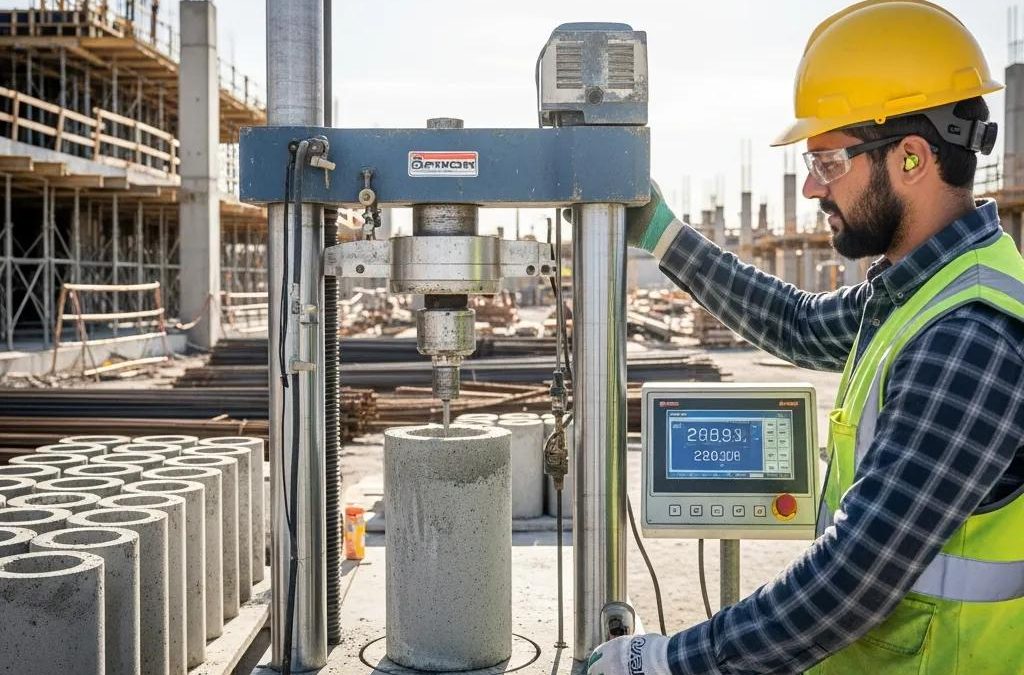
- Testing: After curing, the samples are placed in a compression testing machine, where a load is applied until the sample fails. The maximum load is recorded, and the compressive strength is calculated based on the cross-sectional area of the cylinder.
What other testing methods like slump test and non-destructive tests are used?
- Slump Test: This test measures the consistency and workability of fresh concrete. A cone-shaped mold is filled with concrete, and the mold is removed to observe how much the concrete slumps. This provides insight into the mix's water content and potential strength.
- Rebound Hammer Test: This non-destructive method involves striking the surface of cured concrete with a spring-loaded hammer. The rebound distance is measured, which correlates with the concrete's compressive strength. However, results can be influenced by surface conditions and should be used as a preliminary assessment rather than a definitive strength measurement.
- Ultrasonic Pulse Velocity Test: This technique uses ultrasonic waves to assess the quality and uniformity of concrete. By measuring the time it takes for the waves to travel through the concrete, estimations of strength and density can be made. This method is more effective for detecting defects and assessing uniformity than for precise strength measurement.
Destructive & Non-Destructive Concrete Strength Testing
Among all the concrete characteristics, the compressive strength is known as the most important feature and therefore, it is often utilized to quantify the quality of concretes. The assessment of concretes strength in existing constructions is important during their service life. Thus, in addition to destructive evaluation of strength, many non-destructive techniques have been adopted to assess the concretes strength. Ultrasonic Pulse Velocity (UPV) is one of the nondestructive techniques that involve measuring the speed of ultrasonic wave through concretes to predict concretes strength.
Destructive and non-destructive testing of concrete structures, 2014
What ASTM Standards Govern Concrete Strength Measurement?
Which ASTM standards define concrete testing procedures?
- ASTM C39: This standard outlines the procedure for testing the compressive strength of cylindrical concrete specimens. It provides guidelines for sample preparation, curing, and testing methods.
- ASTM C143: This standard specifies the method for measuring the slump of fresh concrete, which is essential for assessing workability and consistency.
- ASTM C597: This standard covers the ultrasonic pulse velocity method for determining the quality of concrete, providing a non-destructive means of assessing strength.
ASTM Standards for Concrete Core & Cylinder Compressive Strength
Testing procedures for cores (C 42/C 42M) and push-out cylinders (C 873) also refer to ASTM C 39/C 39M for measuring compressive strength. All of these standards specify tolerances
Concrete strength testing, 2006
How do these standards ensure consistent and accurate strength results?
How Does Curing Time Affect Concrete Strength Development?

What is the typical curing duration for concrete to reach full strength?
How does curing influence compressive strength and durability?
What are Common Causes of Concrete Strength Failure and How to Prevent Them?
Which factors lead to reduced concrete strength?
- Inadequate Curing: Insufficient curing can lead to incomplete hydration, resulting in lower strength and increased susceptibility to cracking.
- Poor Mix Design: An improper balance of water, cement, and aggregates can weaken the concrete mix, affecting its overall performance.
- Contamination: The presence of foreign materials, such as dirt or chemicals, can compromise the integrity of the concrete, leading to strength failures.
- Improper Testing: Errors in testing procedures or equipment calibration can yield inaccurate strength measurements, leading to false confidence in the concrete's performance.