
How Concrete Strength is Measured

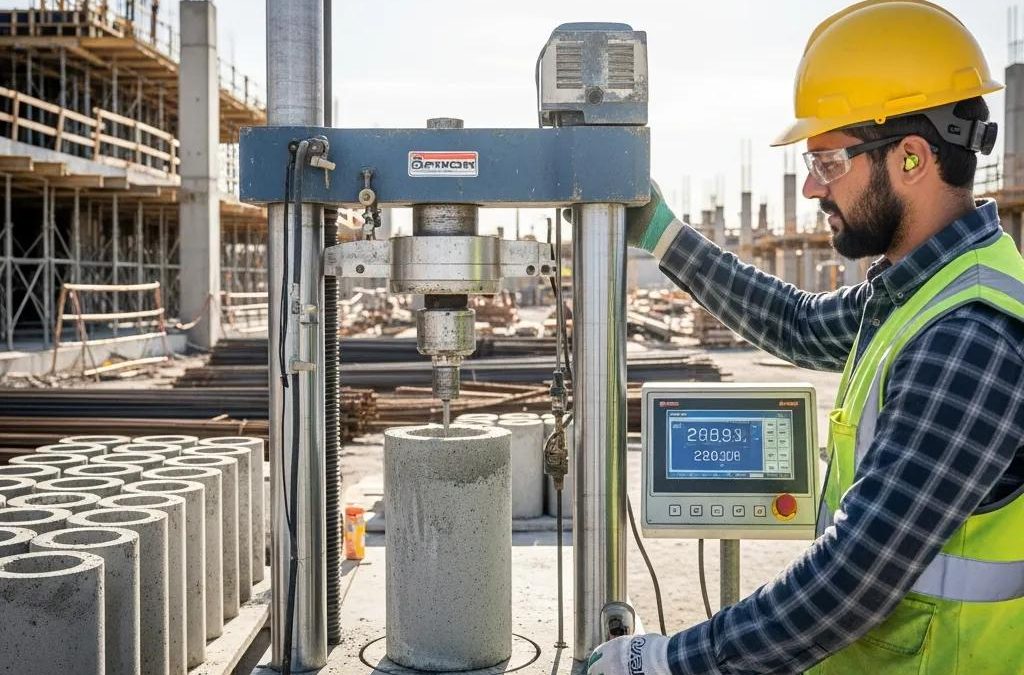
Construction worker testing concrete compressive strength with a hydraulic testing machine on a construction site, surrounded by concrete cylinders and reinforcing materials.

How Concrete Strength is Measured: Comprehensive Guide to Concrete Compressive Strength Testing and Standards

Concrete is a fundamental material in construction, and understanding its strength is crucial for ensuring the safety and durability of structures. This comprehensive guide explores how concrete strength is measured, focusing on compressive strength testing and the standards that govern these processes. Readers will learn about the significance of compressive strength, the methods used for testing, and the implications of these measurements for construction projects. Many construction professionals face challenges in ensuring that their concrete meets the required strength specifications, which can lead to structural failures. This article will provide insights into the measurement of concrete strength, the various testing methods available, and the standards that ensure accuracy and reliability. We will also discuss the importance of curing time and common causes of strength failure, along with how Morici Bros Concrete ensures quality in their services.

What is Concrete Compressive Strength and Why Does PSI Matter?

Concrete compressive strength is defined as the capacity of a concrete material to withstand axial loads without failure. It is typically measured in pounds per square inch (PSI), which indicates the maximum load that the concrete can bear before it fails. This measurement is crucial because it directly correlates with the durability and longevity of concrete structures. Higher compressive strength values indicate a more robust material, which is essential for supporting heavy loads and resisting environmental factors.

Understanding PSI ratings is vital for construction professionals, as these ratings inform decisions regarding material selection and structural design. For instance, a concrete mix with a compressive strength of 4,000 PSI is suitable for most residential applications, while higher strengths, such as 5,000 PSI or more, may be required for commercial or industrial projects. The measurement of compressive strength is typically conducted through standardized testing methods, ensuring that the results are reliable and consistent across different batches of concrete.

How is compressive strength defined and measured in concrete?

Compressive strength is defined as the maximum compressive stress that a material can withstand before failure. In concrete, this is measured by subjecting a concrete sample, usually in the form of a cylinder, to a controlled load until it fails. The strength is calculated by dividing the maximum load applied by the cross-sectional area of the sample. This process is governed by standards set forth by organizations such as ASTM (American Society for Testing and Materials), which provide guidelines for sample preparation, testing procedures, and equipment calibration.

The most common method for measuring compressive strength is the concrete cylinder test, where cylindrical samples are cast and cured before being tested. The results from these tests provide critical data that inform engineers and architects about the concrete’s performance under load, allowing for safer and more effective design choices.

What does PSI rating indicate for concrete durability?

The PSI rating of concrete serves as a key indicator of its durability and performance in various environmental conditions. A higher PSI rating generally signifies a denser and stronger concrete mix, which can better withstand external forces such as weathering, freeze-thaw cycles, and chemical exposure. For example, concrete with a PSI rating of 3,000 is suitable for sidewalks and driveways, while a rating of 4,000 or higher is often required for structural elements like beams and columns.

Moreover, the PSI rating can influence the long-term maintenance and repair needs of a structure. Concrete with lower strength ratings may require more frequent inspections and repairs, while higher strength concrete can lead to reduced lifecycle costs and improved structural integrity. Understanding the implications of PSI ratings is essential for construction professionals to ensure that their projects meet safety and performance standards.

Which Concrete Strength Testing Methods are Most Reliable?

Concrete strength testing apparatus with a cylinder under compression, slump cone for consistency measurement, and various concrete samples on a workbench, illustrating methods for assessing concrete durability and performance.

Several methods are employed to test the strength of concrete, each with its own advantages and limitations. The reliability of these methods is crucial for ensuring that the concrete used in construction meets the required specifications.

  1. Concrete Cylinder Test: This is the most widely used method for determining compressive strength. It involves casting cylindrical samples of concrete, curing them, and then applying a compressive load until failure. The results provide a direct measure of the concrete's strength.
  2. Slump Test: While not a direct measure of compressive strength, the slump test assesses the workability and consistency of fresh concrete. A higher slump indicates a more workable mix, which can influence the final strength of the cured concrete.
  3. Non-Destructive Testing (NDT): Methods such as rebound hammer tests and ultrasonic pulse velocity tests allow for the assessment of concrete strength without damaging the structure. These methods are useful for evaluating existing structures and identifying areas that may require further investigation.

How is the concrete cylinder test procedure performed step-by-step?

The concrete cylinder test procedure involves several key steps to ensure accurate results:

  1. Sample Preparation: Fresh concrete is poured into cylindrical molds, typically measuring 6 inches in diameter and 12 inches in height. The concrete is compacted to eliminate air pockets.
  2. Curing: The samples are cured under controlled conditions, usually in a moist environment, for a specified period, typically 28 days, to allow the concrete to reach its intended strength.
  3. Testing: After curing, the samples are placed in a compression testing machine, where a load is applied until the sample fails. The maximum load is recorded, and the compressive strength is calculated based on the cross-sectional area of the cylinder.

This method is standardized by ASTM C39, ensuring consistency and reliability in the results obtained.

What other testing methods like slump test and non-destructive tests are used?

  • Slump Test: This test measures the consistency and workability of fresh concrete. A cone-shaped mold is filled with concrete, and the mold is removed to observe how much the concrete slumps. This provides insight into the mix's water content and potential strength.
  • Rebound Hammer Test: This non-destructive method involves striking the surface of cured concrete with a spring-loaded hammer. The rebound distance is measured, which correlates with the concrete's compressive strength. However, results can be influenced by surface conditions and should be used as a preliminary assessment rather than a definitive strength measurement.
  • Ultrasonic Pulse Velocity Test: This technique uses ultrasonic waves to assess the quality and uniformity of concrete. By measuring the time it takes for the waves to travel through the concrete, estimations of strength and density can be made. This method is more effective for detecting defects and assessing uniformity than for precise strength measurement.

These methods complement the concrete cylinder test by providing additional insights into the concrete’s properties and performance.

Further emphasizing the importance of comprehensive testing, research highlights how both destructive and non-destructive methods, like Ultrasonic Pulse Velocity, are crucial for accurately assessing concrete quality throughout a structure’s lifespan.

Destructive & Non-Destructive Concrete Strength Testing

Among all the concrete characteristics, the compressive strength is known as the most important feature and therefore, it is often utilized to quantify the quality of concretes. The assessment of concretes strength in existing constructions is important during their service life. Thus, in addition to destructive evaluation of strength, many non-destructive techniques have been adopted to assess the concretes strength. Ultrasonic Pulse Velocity (UPV) is one of the nondestructive techniques that involve measuring the speed of ultrasonic wave through concretes to predict concretes strength.

Destructive and non-destructive testing of concrete structures, 2014

What ASTM Standards Govern Concrete Strength Measurement?

ASTM standards play a critical role in ensuring that concrete strength measurements are consistent, reliable, and accurate. These standards outline the procedures for testing, the equipment required, and the conditions under which tests should be conducted.

Which ASTM standards define concrete testing procedures?

  • ASTM C39: This standard outlines the procedure for testing the compressive strength of cylindrical concrete specimens. It provides guidelines for sample preparation, curing, and testing methods.
  • ASTM C143: This standard specifies the method for measuring the slump of fresh concrete, which is essential for assessing workability and consistency.
  • ASTM C597: This standard covers the ultrasonic pulse velocity method for determining the quality of concrete, providing a non-destructive means of assessing strength.

These standards ensure that testing procedures are uniform across different laboratories and projects, facilitating reliable comparisons of concrete strength.

Indeed, the rigorous framework provided by ASTM standards, particularly C39, is foundational for ensuring consistent and reliable compressive strength measurements across various concrete testing methods.

ASTM Standards for Concrete Core & Cylinder Compressive Strength

Testing procedures for cores (C 42/C 42M) and push-out cylinders (C 873) also refer to ASTM C 39/C 39M for measuring compressive strength. All of these standards specify tolerances

Concrete strength testing, 2006

How do these standards ensure consistent and accurate strength results?

The adherence to ASTM standards ensures that concrete testing is conducted under controlled conditions, minimizing variability in results. By following standardized procedures, laboratories can achieve consistent results that accurately reflect the concrete’s performance characteristics. This consistency is crucial for engineers and architects who rely on these measurements to make informed decisions about material selection and structural design.

Moreover, the use of standardized equipment and testing methods helps to eliminate discrepancies that may arise from different testing practices. This reliability is essential for maintaining quality assurance in construction projects, ultimately leading to safer and more durable structures.

How Does Curing Time Affect Concrete Strength Development?

Freshly poured concrete blocks covered with burlap and plastic in molds, undergoing curing to enhance strength and durability, in a controlled environment.

Curing time is a critical factor in the development of concrete strength. Proper curing allows the concrete to hydrate fully, leading to optimal strength and durability.

What is the typical curing duration for concrete to reach full strength?

The typical curing duration for concrete to reach its full strength is 28 days. During this period, the hydration process continues, allowing the concrete to gain strength gradually. While concrete may achieve approximately 70% of its strength within the first 7 days, the majority of strength development occurs over the full curing period.

Factors such as temperature, humidity, and the specific mix design can influence the curing duration. In some cases, accelerated curing methods may be employed to achieve desired strength levels more quickly, but these methods must be carefully controlled to avoid compromising the concrete’s integrity.

How does curing influence compressive strength and durability?

Curing plays a vital role in influencing both compressive strength and durability. Proper curing helps to maintain moisture levels in the concrete, preventing premature drying and cracking. This is essential for achieving the desired strength, as inadequate curing can lead to weak points within the concrete structure.

Additionally, well-cured concrete exhibits improved resistance to environmental factors such as freeze-thaw cycles and chemical exposure. This enhanced durability is crucial for ensuring the longevity of concrete structures, particularly in harsh climates or aggressive environments.

Measuring Concrete Strength: Compressive Testing & ASTM Standards

Concrete strength failures can occur due to various factors, and understanding these causes is essential for preventing issues in construction projects.

Which factors lead to reduced concrete strength?

  1. Inadequate Curing: Insufficient curing can lead to incomplete hydration, resulting in lower strength and increased susceptibility to cracking.
  2. Poor Mix Design: An improper balance of water, cement, and aggregates can weaken the concrete mix, affecting its overall performance.
  3. Contamination: The presence of foreign materials, such as dirt or chemicals, can compromise the integrity of the concrete, leading to strength failures.
  4. Improper Testing: Errors in testing procedures or equipment calibration can yield inaccurate strength measurements, leading to false confidence in the concrete's performance.

How can proper testing and curing mitigate strength failures?

Implementing proper testing and curing practices is essential for mitigating strength failures. Regular testing of concrete samples during the curing process can help identify potential issues early on, allowing for corrective actions to be taken. Additionally, adhering to established curing protocols ensures that the concrete achieves its intended strength and durability.

By prioritizing quality assurance through rigorous testing and effective curing methods, construction professionals can significantly reduce the risk of strength failures and enhance the overall performance of their concrete structures.

Why is Measuring Concrete Strength Critical for Your Syracuse Project?

Measuring concrete strength is particularly critical for construction projects in Syracuse, where environmental conditions and local regulations may impact material performance.

How Morici Bros Concrete ensures quality through strength testing

Morici Bros Concrete prioritizes quality assurance in all its concrete projects by implementing rigorous strength testing protocols. By adhering to ASTM standards and utilizing reliable testing methods, the company ensures that all concrete used in its projects meets the required strength specifications. This commitment to quality not only enhances the durability of the structures but also instills confidence in clients regarding the safety and longevity of their investments.

How to request concrete strength measurement services in Syracuse, NY

For those interested in concrete strength measurement services, Morici Bros Concrete offers comprehensive testing solutions tailored to meet the specific needs of each project. Clients can easily request services by contacting the company directly to discuss their requirements and schedule testing. With a focus on quality and reliability, Morici Bros Concrete is dedicated to providing exceptional service to the Syracuse community.