The Role of Rebar & Mesh in Concrete

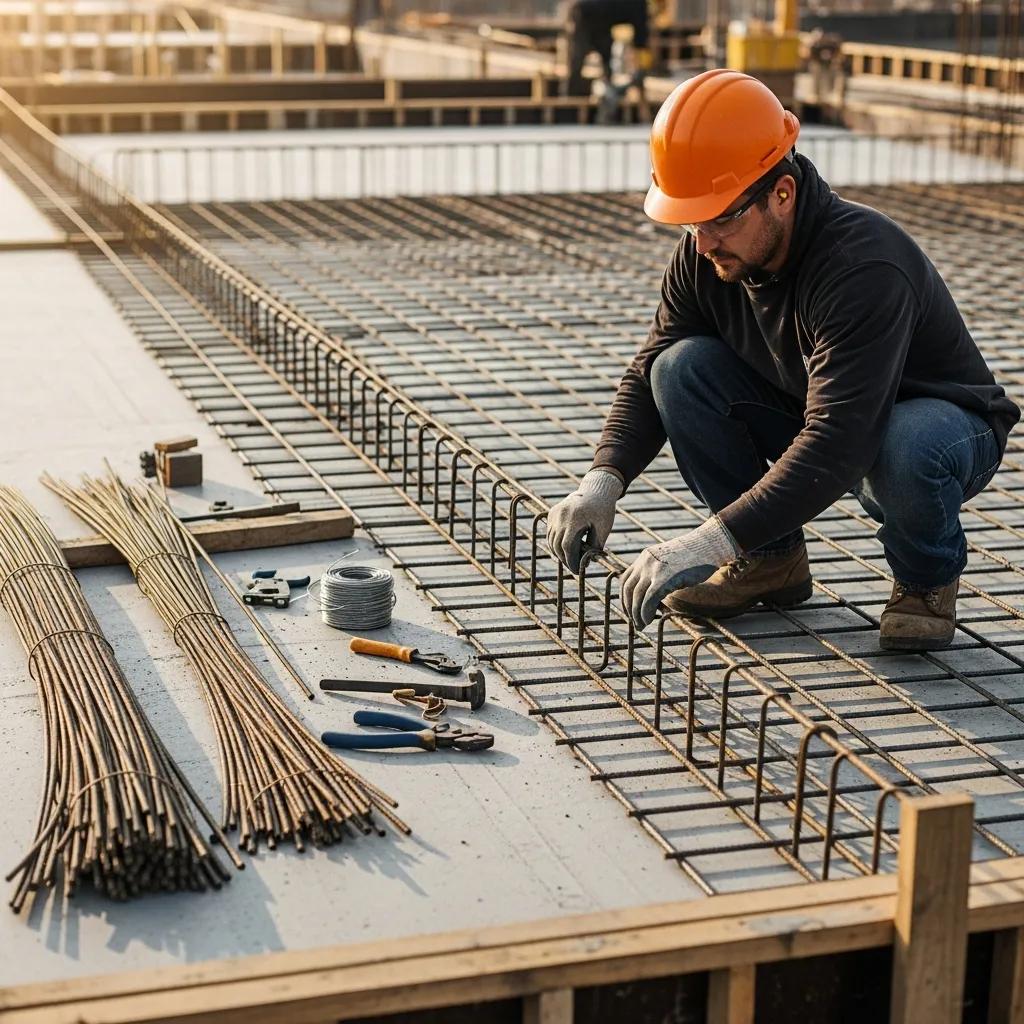
Construction worker installing rebar on concrete slab, emphasizing steel reinforcement for durable structures.

Installing Rebar and Wire Mesh for Durable Concrete Slabs

Rebar and wire mesh are critical components in concrete construction, providing the necessary strength and durability to withstand various stresses. This article delves into the essential roles that steel reinforcement bars and wire mesh play in enhancing concrete structures. Readers will learn about the types of rebar, the benefits of wire mesh, and best practices for installation, ensuring that their concrete projects are built to last. The importance of proper reinforcement cannot be overstated, as inadequate support can lead to significant structural issues over time. We will explore the mechanisms behind rebar and mesh, their applications in both residential and commercial construction, and why choosing the right materials and techniques is vital for long-lasting results.

What Are Steel Reinforcement Bars and How Do They Strengthen Concrete?

Steel reinforcement bars, commonly known as rebar, are essential for enhancing the tensile strength of concrete. Concrete is strong in compression but weak in tension, making rebar crucial for preventing cracks and structural failures. By embedding rebar within concrete, the overall strength and durability of the structure are significantly improved. Different types of rebar are available, each designed for specific applications, ensuring that the right material is used for the right project.

Types, Sizes, and Materials of Rebar Used in Concrete Reinforcement

Rebar comes in various types, sizes, and materials, each suited for different construction needs. Common materials include carbon steel, stainless steel, and epoxy-coated rebar, which offers corrosion resistance. The sizes of rebar are standardized, ranging from #3 (3/8 inch) to #18 (2.257 inches) in diameter, allowing for flexibility in design and application. Each type of rebar has its advantages; for instance, epoxy-coated rebar is ideal for environments prone to moisture and corrosion, while carbon steel is widely used for its strength and cost-effectiveness.

Further research delves into the specific static and dynamic strength properties of steel reinforcing bars, highlighting how factors like strain rate and yield stress influence their performance.

Steel Rebar Properties: Static & Dynamic Strength

A literature review of the effects of high strain rates on the properties of steel reinforcing bars (rebars) was conducted. Static and dynamic properties were gathered for bars satisfying ASTM A615, A15, A432, A431, and A706, with yield stresses ranging from 42 to 103 ksi (290 to 710 MPa). Strength enhancement with strain rate was expressed in the form of a dynamic increase factor (DIF) defined as the ratio of the dynamic to static yield (or ultimate) stress. It was observed that the DIF would increase for lower rebar yield stress. A simple relationship is proposed which gives the DIF (for both yield and ultimate stress) as a function of strain rate and yield stress. This relationsh

Review of static and dynamic properties of steel reinforcing bars, 1998

How Rebar Placement Prevents Concrete Cracking and Enhances Structural Integrity

Proper placement of rebar is critical to maximizing its effectiveness in preventing concrete cracking. Techniques such as ensuring adequate cover, spacing, and alignment are essential for maintaining structural integrity. Misplacement can lead to weak points in the concrete, increasing the risk of cracking and failure. By following best practices in rebar placement, builders can enhance the overall strength and longevity of concrete structures.

How Does Concrete Wire Mesh Installation Improve Floor and Slab Durability?

Workers installing concrete wire mesh for slab reinforcement, enhancing durability and structural integrity, with rebar supports and measuring tools visible.

Concrete wire mesh, often used in conjunction with rebar, provides additional support and stability to concrete slabs and floors. This mesh acts as a secondary reinforcement layer, helping to distribute loads evenly and reduce the likelihood of cracking. The installation of wire mesh is a straightforward process that can significantly enhance the durability of concrete surfaces, making it a popular choice for both residential and commercial projects.

Benefits of Wire Mesh for Concrete Floors and Slabs

The use of wire mesh in concrete floors and slabs offers several benefits, including increased durability, cost-effectiveness, and ease of installation. Wire mesh helps to control cracking by providing a network of support throughout the concrete, which is particularly beneficial in large slabs where stress concentrations can occur. Additionally, the installation process is relatively simple, allowing for quicker project completion without compromising quality.

Choosing the Right Mesh Gauge and Mesh Size for Reinforcement

Selecting the appropriate mesh gauge and size is crucial for effective reinforcement. Factors to consider include the thickness of the concrete slab, the expected load, and environmental conditions. Common mesh sizes range from 6×6 inches to 4×4 inches, with varying wire diameters. Choosing the right mesh ensures optimal performance and longevity of the concrete structure, preventing issues such as cracking and settling.

What Are the Best Practices for Rebar Bending, Cutting, and Installation in Concrete Projects?

Effective handling of rebar is essential for ensuring the structural integrity of concrete projects. Best practices for bending, cutting, and installing rebar can significantly impact the overall quality of the construction. Understanding the tools and techniques involved in these processes is vital for achieving optimal results.

Step-by-Step Guide to Rebar Bending and Cutting Techniques

Construction worker using a rebar bender to demonstrate proper bending techniques on a construction site, surrounded by rebar and tools for concrete reinforcement.

Bending and cutting rebar requires specific tools and techniques to ensure precision and safety. A rebar bender is commonly used for creating accurate bends, while a cutting tool or saw is necessary for achieving clean cuts. The process typically involves measuring the required lengths, marking the rebar, and then using the appropriate tools to bend or cut as needed. Following a systematic approach helps to minimize waste and ensures that the rebar fits correctly within the concrete structure.

Common Installation Methods for Rebar and Wire Mesh in Concrete Slabs

There are several methods for installing rebar and wire mesh in concrete slabs, each with its advantages and disadvantages. Common techniques include using chairs or supports to maintain proper spacing, tying rebar intersections with wire, and ensuring that mesh is positioned correctly within the slab. Understanding these methods allows builders to choose the most effective approach for their specific project, enhancing the overall strength and durability of the concrete.

How Does Reinforced Concrete Benefit Residential and Commercial Construction?

Reinforced concrete offers numerous advantages for both residential and commercial construction projects. The combination of rebar and wire mesh provides enhanced strength, durability, and resistance to various environmental factors. This makes reinforced concrete an ideal choice for a wide range of applications, from foundations to structural beams.

Advantages of Using Rebar and Mesh in Concrete Slabs for Homeowners

Homeowners benefit from using rebar and mesh in concrete slabs through increased durability and reduced maintenance costs. Reinforced concrete is less prone to cracking and settling, which can lead to costly repairs over time. Additionally, the aesthetic options available with reinforced concrete allow homeowners to achieve the desired look for their outdoor spaces while ensuring structural integrity.

Structural Benefits for Commercial Property Managers and Builders

For commercial property managers and builders, reinforced concrete provides significant structural benefits, including cost-effectiveness and enhanced safety. The longevity of reinforced concrete reduces the need for frequent repairs, leading to lower maintenance costs. Furthermore, the strength of reinforced concrete allows for larger spans and more flexible design options, making it a preferred choice for commercial construction projects.

What Problems Occur Without Proper Rebar and Mesh Reinforcement in Concrete?

Inadequate reinforcement in concrete can lead to a range of problems, including cracking, settling, and structural failure. Understanding these issues is crucial for ensuring the longevity and safety of concrete structures.

Common Concrete Cracking Issues Due to Lack of Reinforcement

Without proper rebar and mesh reinforcement, concrete is susceptible to various cracking issues. Common types of cracks include shrinkage cracks, settlement cracks, and structural cracks, each resulting from different factors such as temperature changes, moisture loss, and inadequate support. Addressing these issues during the design and construction phases is essential for preventing long-term damage.

Long-Term Risks to Structural Integrity Without Steel Reinforcement

The long-term risks associated with inadequate steel reinforcement can be severe, leading to compromised structural integrity and safety hazards. Over time, unreinforced concrete may experience significant deterioration, resulting in costly repairs or even complete failure. Regular inspections and adherence to best practices in reinforcement are vital for maintaining the safety and longevity of concrete structures.

Why Choose Morici Bros Concrete for Expert Rebar and Wire Mesh Installation in Syracuse, NY?

When it comes to concrete reinforcement, choosing a reliable contractor is essential for ensuring quality and durability. Morici Bros Concrete specializes in rebar and wire mesh installation, providing expert services tailored to meet the needs of both residential and commercial projects.

Local Expertise and Quality Workmanship in Concrete Reinforcement

Morici Bros Concrete brings years of experience in the Syracuse, NY area, ensuring that every project is completed with the highest standards of quality and craftsmanship. Our team understands the unique challenges of local construction and is committed to delivering durable and reliable concrete solutions.

Tailored Reinforcement Solutions for Residential and Commercial Projects

We offer tailored reinforcement solutions designed to meet the specific needs of each project. Whether you are a homeowner looking to enhance your outdoor space or a commercial builder requiring robust structural support, Morici Bros Concrete has the expertise and resources to deliver exceptional results.

Rebar TypeMaterialCommon Use
Carbon SteelStandardGeneral construction
Epoxy-CoatedCorrosion-resistantMoist environments
Stainless SteelHigh durabilityCoastal areas

The table above illustrates the different types of rebar available, highlighting their materials and common applications. Understanding these options allows builders to select the most appropriate rebar for their specific project needs.

Concrete reinforcement is a critical aspect of construction that cannot be overlooked. By understanding the roles of rebar and wire mesh, builders can ensure the longevity and safety of their structures. Proper installation techniques and material selection are essential for achieving optimal results, making it imperative to work with experienced professionals like Morici Bros Concrete.