
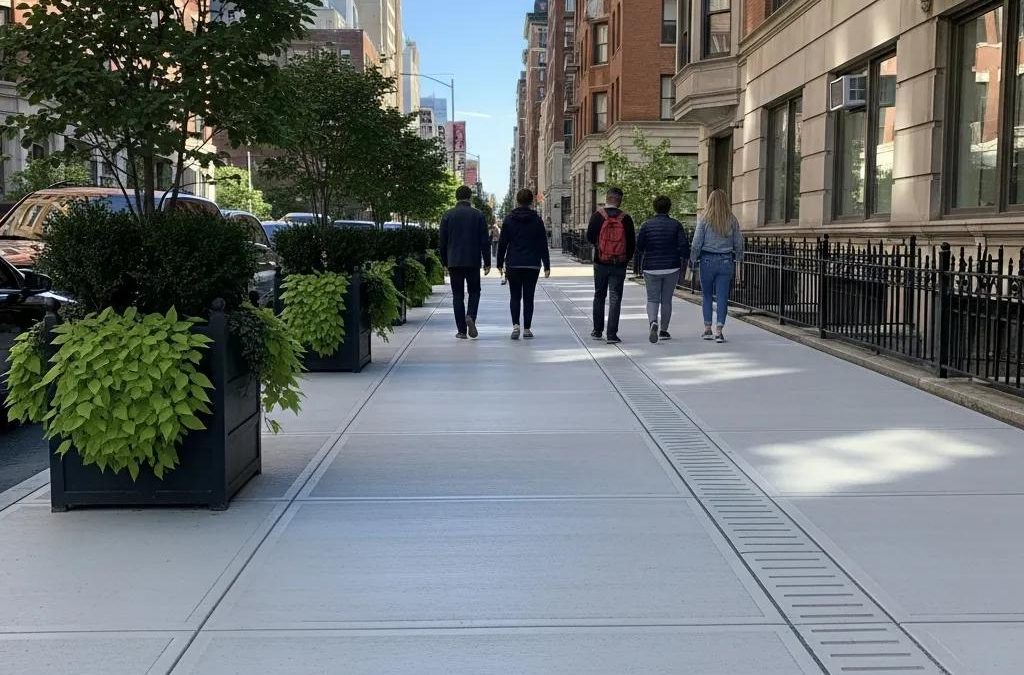
Sidewalk & Walkway Installation Waukesha, WI
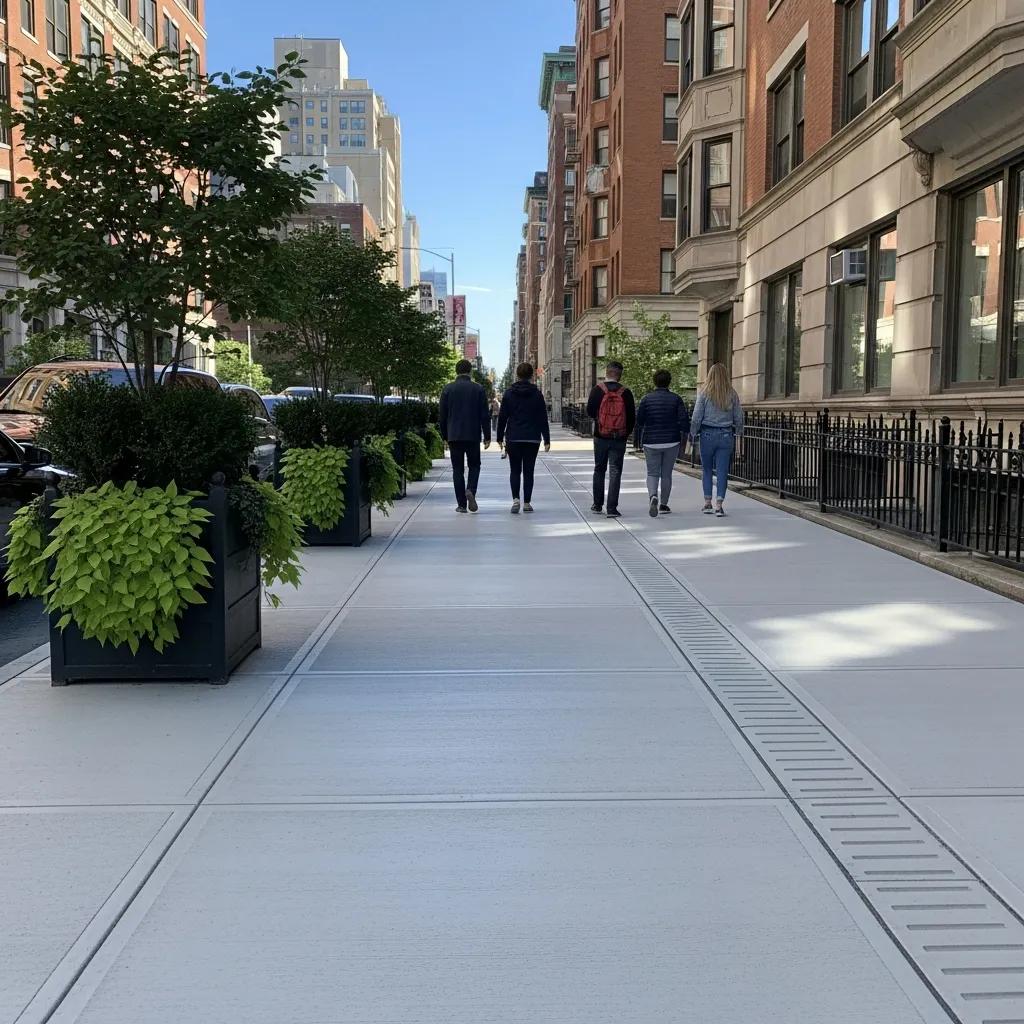
Expert Concrete Walkway Solutions
Concrete sidewalks and walkways provide safe, durable pedestrian paths and improve property appearance. In Waukesha, WI, proper installation helps properties meet local standards. This guide summarizes benefits, installation steps, material choices, permitting, and maintenance to help homeowners and businesses plan concrete projects.
Top Benefits of Concrete Sidewalk Installation in Waukesha
Concrete sidewalks are common for residential and commercial properties because they combine durability, low maintenance, and visual appeal.
Durability and Longevity of Concrete Walkways
Properly installed concrete resists heavy foot traffic and weather, offering decades of service. In freeze-thaw climates like Wisconsin, correct subbase preparation, control joints, and timely repairs reduce cracking and extend service life.
Enhancing Property Value and Curb Appeal
A neat, well-placed sidewalk boosts curb appeal and marketability; buyers and tenants often view maintained walkways as evidence of overall property care.
How Does the Sidewalk and Walkway Installation Process Work in Waukesha?
Knowing the typical installation steps and timing helps set realistic expectations for any sidewalk project.
Step-by-Step Concrete Pouring and Finishing Techniques
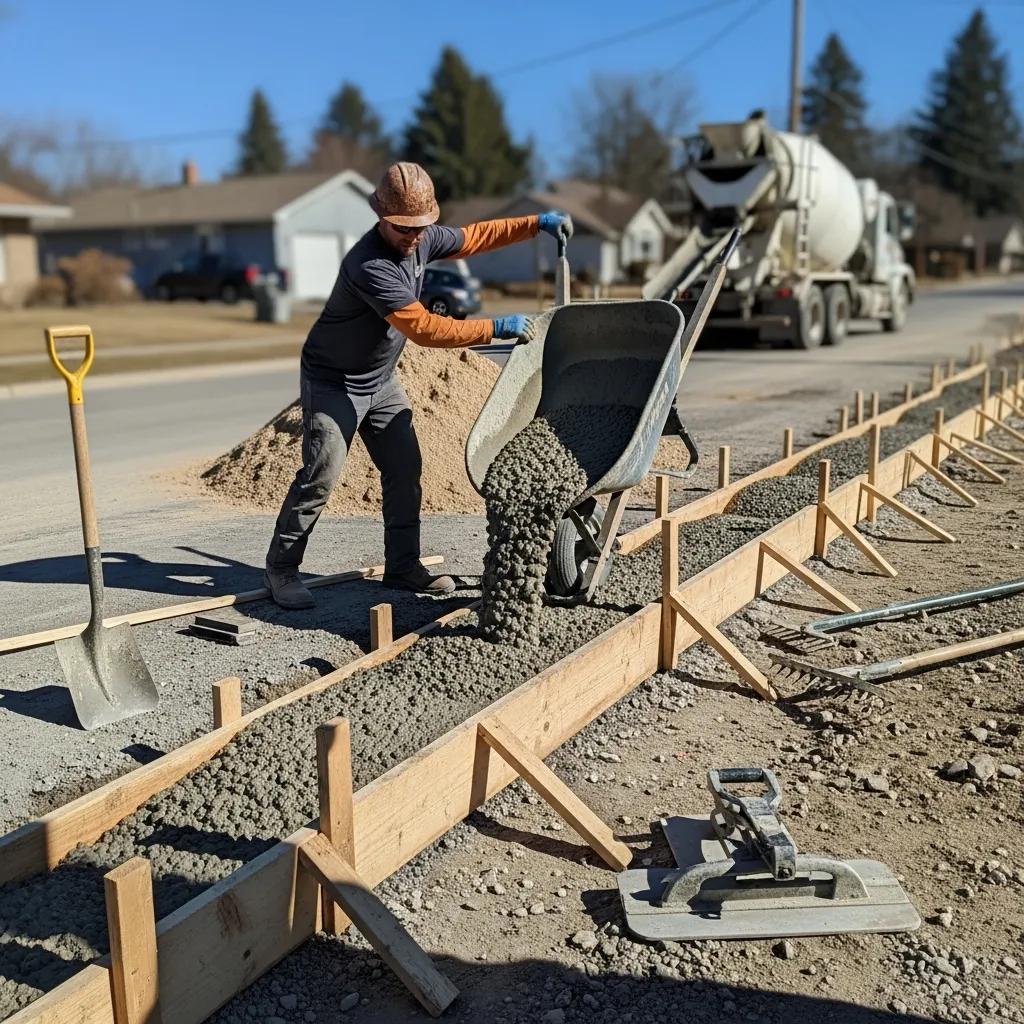
Installations usually follow a clear sequence: site clearing and grading, forming, pouring, finishing (smooth, broom, stamped, or textured), and controlled curing. Attention to compaction, joint placement, and curing produces a strong, even surface.
Typical Project Duration and Scheduling Considerations
Most sidewalk pours and finishes take one to three days; curing may require several days to several weeks. Plan around weather—avoid rain and extreme temperatures—and allow proper curing to prevent premature cracking.
What Are the Material Options and Finishing Techniques for Walkways?
Homeowners can choose from standard mixes and several finishing options depending on budget and desired appearance.
Standard vs. Sustainable Concrete Mixes
Standard concrete provides a proven, strong surface. Sustainable mixes incorporate recycled content or supplementary cementitious materials (like fly ash or slag) to reduce embodied carbon while maintaining performance.
Research shows mixes with fly ash can improve durability and workability compared with traditional mixes.
High-Fly Ash SCC for Durable & Eco-Friendly Sidewalks
This article presents the findings of a study on the application of high-fly ash self-compacting concrete (SCC) in sidewalk construction projects in Hanoi, Vietnam. The study focuses on evaluating the mechanical properties, including compressive strength, tensile strength, abrasion and imper-meability of high-fly ash SCC, with a high-fly ash content comprising up to 60% of the total powder mass. A comparison is made between high-fly ash SCC and conventional concrete (CC) of equal compressive strength. The findings reveal that high-fly ash SCC exhibits a 14% increase in tensile strength, a marginally lower abrasion of approximately 1.29%, and attains a water penetration resistance rating of B10, surpassing conventional concrete that achieves B8.
Application of High-Fly Ash Self-compacting Concrete in Sidewalk Construction in Hanoi City, 2024
Decorative and Functional Concrete Finishing Methods
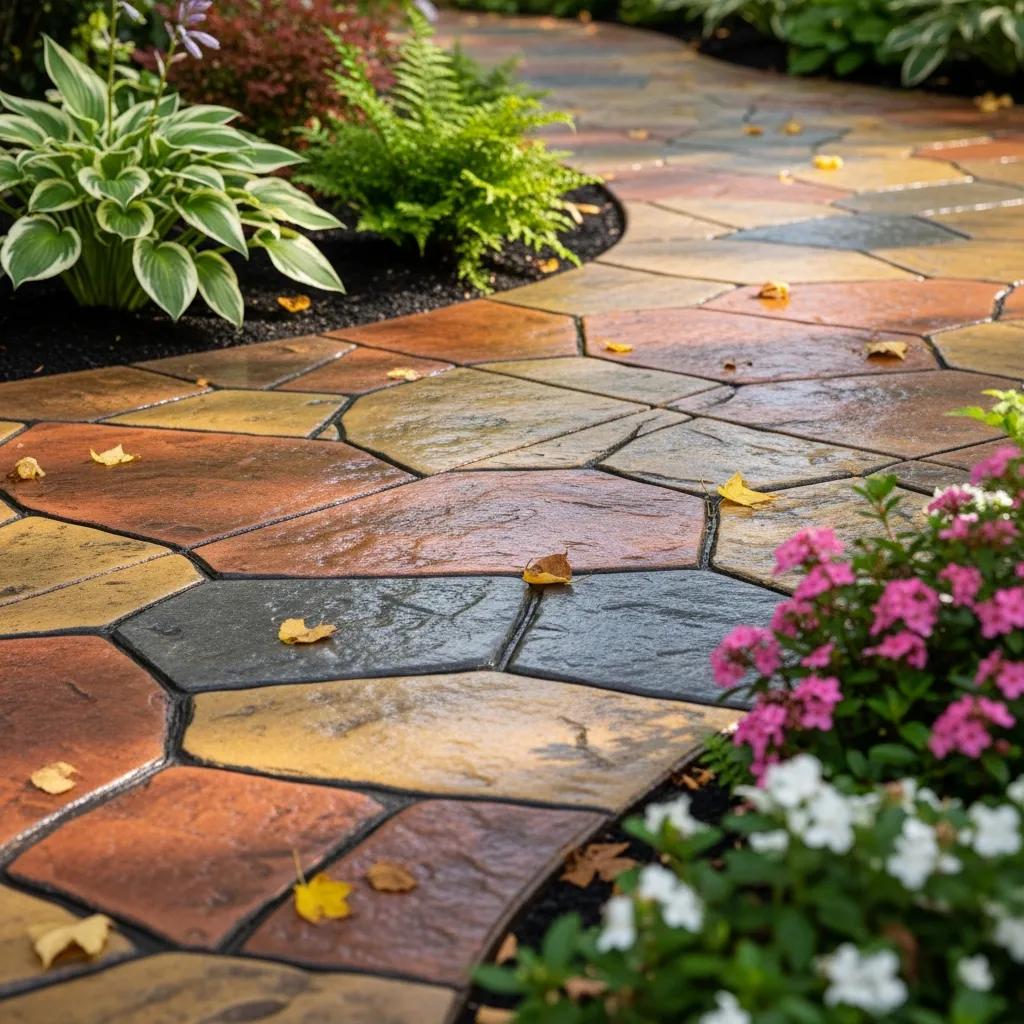
Decorative options (stamping, coloring) can mimic stone or brick, while functional finishes (broom, exposed aggregate) improve traction. Choose finishes that balance aesthetics and safety, especially in wet conditions.
How Do Local Regulations and Permits Affect Sidewalk Installation in Waukesha?
Local rules determine when permits and inspections are required; following them avoids delays and ensures compliance.
Understanding Permit Requirements for Sidewalk Construction
Permits are commonly required for new sidewalks or significant repairs. Contact the City of Waukesha Building Inspection or Public Works Department early to confirm permit needs and any site-specific requirements.
Ensuring ADA Compliance for Pedestrian Walkways
Public walkways must meet ADA standards for width, slope, ramps, and surface texture. Designing for ADA compliance improves accessibility and avoids code issues.
What Sidewalk Repair and Maintenance Services Are Available in Waukesha?
Routine maintenance keeps sidewalks safe and functional while extending lifespan.
Common Concrete Sidewalk Repair Solutions
Typical repairs include crack filling, patching, resurfacing, and joint sealing. Addressing small issues early prevents larger, more costly repairs.
Tips for Maintaining Walkways to Extend Lifespan
Inspect sidewalks seasonally, clear debris, avoid deicing salts that damage concrete, and apply sealants every few years. Promptly repair cracks and settle transitions to prevent trip hazards.
Why Choose Morici Bros Concrete for Your Sidewalk and Walkway Projects in Waukesha?
Selecting an experienced contractor helps ensure a code-compliant, long-lasting installation.
Customer Testimonials and Project Case Studies
Morici Bros Concrete is noted locally for reliable workmanship and timely completion. Case studies illustrate durable, attractive sidewalks installed to meet regulations.
Contact and Service Area Information for Waukesha Clients
Morici Bros Concrete provides consultations, design guidance, and full installation services for Waukesha residents. Contact their team to discuss site needs and schedule an estimate.
This table summarizes durability and environmental impact to help homeowners compare material choices for sidewalk projects.
Concrete walkways are a practical investment for safety and accessibility in Waukesha. Understanding options, permitting, and maintenance helps property owners plan projects that last. Morici Bros Concrete offers local expertise to guide each step from consultation to completion.
Frequently Asked Questions
What are the common signs that my concrete sidewalk needs repair?
Common signs that your concrete sidewalk may need repair include visible cracks, uneven surfaces, or heaving due to freeze-thaw cycles. If you notice pooling water or trip hazards, these indicate maintenance is required. Regular inspections can identify issues early, allowing timely repairs that prevent more extensive damage and keep pedestrians safe.
How long does it take for a concrete sidewalk to cure completely?
Concrete sidewalks typically require a curing period of at least 7 days to achieve optimal strength, but full curing can take up to 28 days. During this time, keep the surface moist and protected from extreme weather. Proper curing helps prevent cracking and ensures the sidewalk’s longevity, so follow recommended curing practices for a successful installation.
Can I install a concrete sidewalk myself, or should I hire a professional?
DIY installation is possible but requires knowledge of proper techniques, tools, and local regulations. Hiring a professional ensures the sidewalk is installed correctly, meets local codes, and performs well. Professionals also handle challenges that may arise during installation, saving time and reducing the risk of costly mistakes.
What types of decorative finishes are available for concrete walkways?
Decorative finishes include stamping, staining, and coloring to mimic natural stone or brick. Exposed aggregate enhances texture and traction, and broom finishes improve slip resistance. Choose a finish that complements aesthetics while maintaining safety, especially in wet conditions.
How can I ensure my concrete sidewalk is ADA compliant?
To meet ADA standards, sidewalks must follow specific width, slope, and surface texture requirements. The minimum width is 36 inches, with a maximum slope of 1:12 for ramps. The surface should be stable, firm, and slip-resistant. Consulting a professional familiar with ADA standards helps design an accessible walkway and avoids potential legal issues.
What maintenance tasks should I perform seasonally on my concrete sidewalk?
Seasonal maintenance includes inspecting for cracks, cleaning debris, and applying sealants as needed. In winter, avoid deicing salts that damage concrete. In spring and fall, check for heaving or settling and address issues promptly. Regular maintenance enhances safety and extends the sidewalk’s lifespan.