
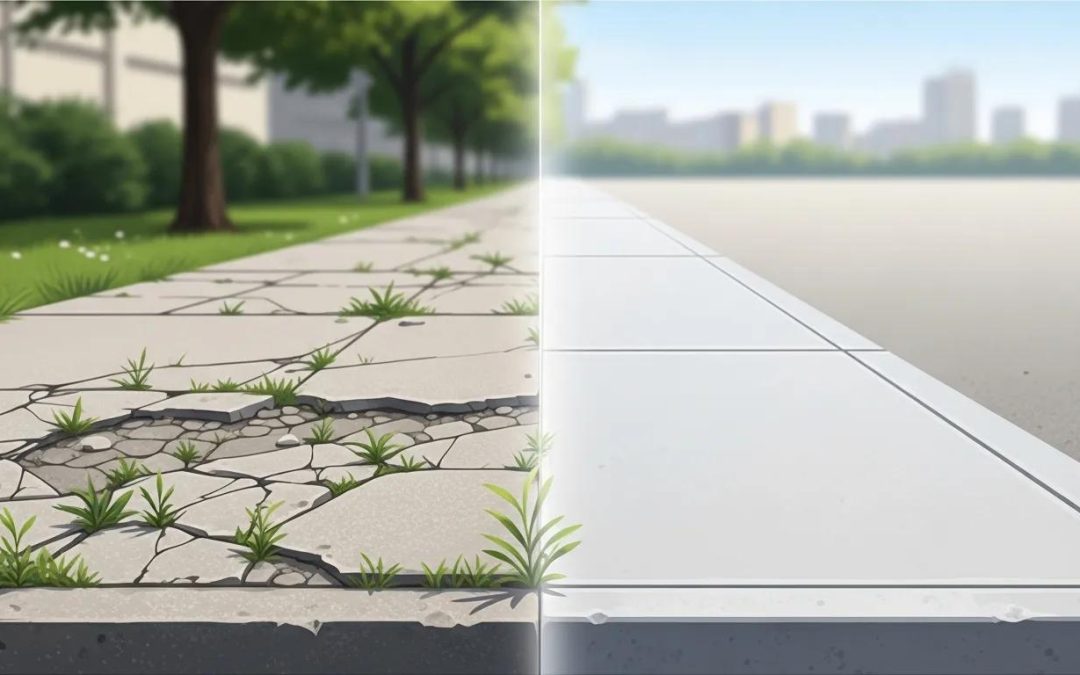
Concrete Sidewalk Repair vs. Replacement: Which Is Better?
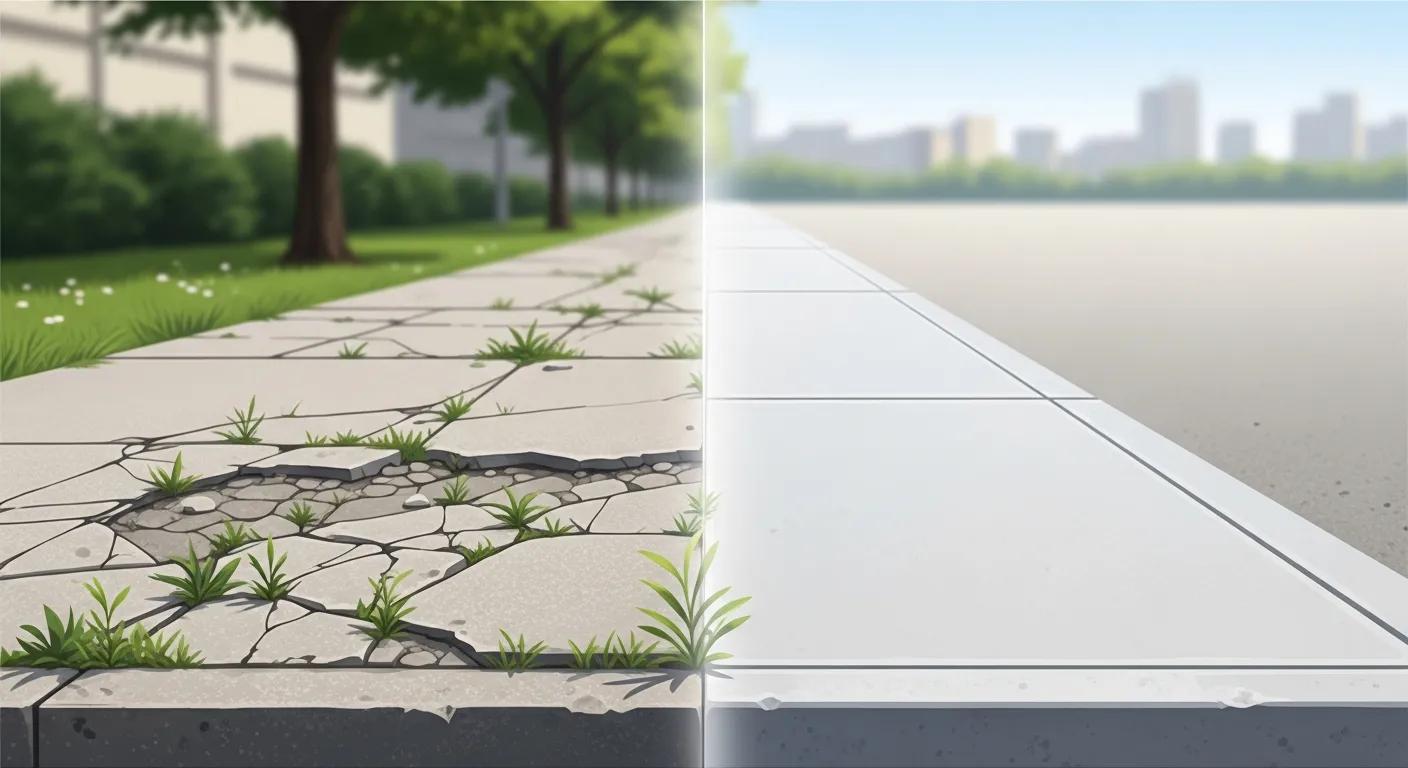
Revive or Renew Your Sidewalk?
Concrete sidewalks provide pedestrian access for homes and businesses but deteriorate from weather, traffic, and tree roots. This guide outlines when to repair versus replace slabs, how to spot damage, common repair and replacement steps, cost differences, and maintenance to extend sidewalk life.
How to Identify Signs of Sidewalk Damage Requiring Repair or Replacement?
Early detection limits bigger repairs and safety risks. Watch for cracks, uneven slabs, settling, and trip hazards to decide next steps.
What Are Common Sidewalk Crack Types and Their Severity?
Cracks vary by cause and severity; common types include:
- Hairline Cracks: Surface fissures that can be monitored or sealed.
- Vertical Cracks: Often from settling and may need assessment.
- Horizontal Cracks: May signal structural stress and require attention.
Inspect periodically to choose patching or replacement.
How Do Trip Hazards Indicate the Need for Sidewalk Intervention?
Raised edges, uneven slabs, or protrusions create trip risks and liability. Property owners are typically responsible for maintaining safe walkways.
- Definition of Trip Hazards: Any surface irregularity that risks tripping.
- Consequences of Neglect: Injuries can lead to claims and higher costs.
- Legal Responsibilities: Local rules often require timely repairs.
Fix trip hazards quickly to reduce risk and meet regulations.
What Are the Most Effective Concrete Sidewalk Repair Techniques?
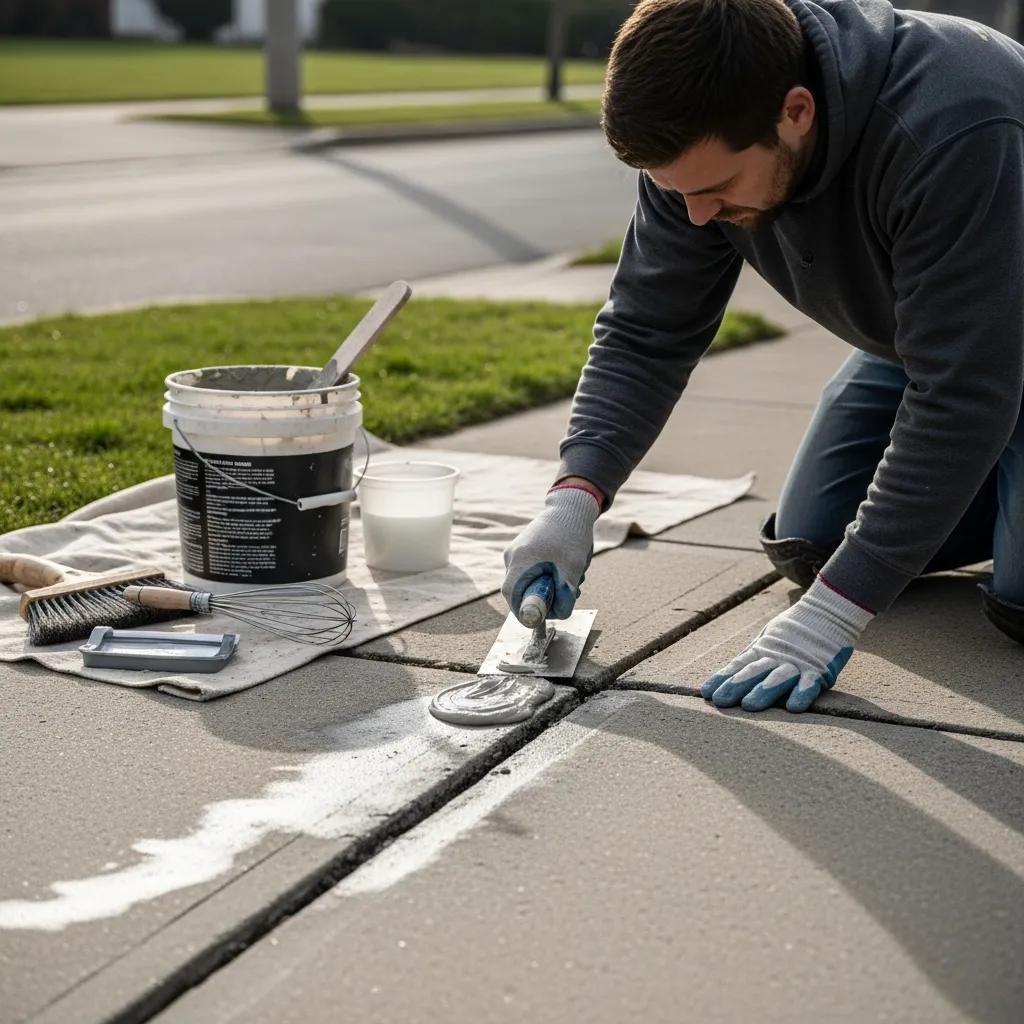
Choose a method based on crack width, slab movement, and surface condition to restore safety and appearance.
How Does Sidewalk Crack Repair and Concrete Patching Work?
Concrete patching addresses minor to moderate cracks. Typical steps:
- Cleaning the Area: Remove debris and loose material.
- Applying a Repair Material: Use a suitable patching compound to fill cracks.
- Finishing the Surface: Smooth to match surrounding texture.
Well-done patching is cost-effective for non-structural damage and extends service life.
What Trip Hazard Solutions Improve Sidewalk Safety?
Common, less-invasive options include:
- Sidewalk Leveling: Raise and stabilize sunken slabs.
- Concrete Resurfacing: Apply a thin overlay to renew texture.
- Installation of Safety Equipment: Add tactile strips or high-visibility markings.
These improve safety and curb appeal with less disruption than full replacement.
When Is Full Concrete Slab Replacement Necessary Over Repair?
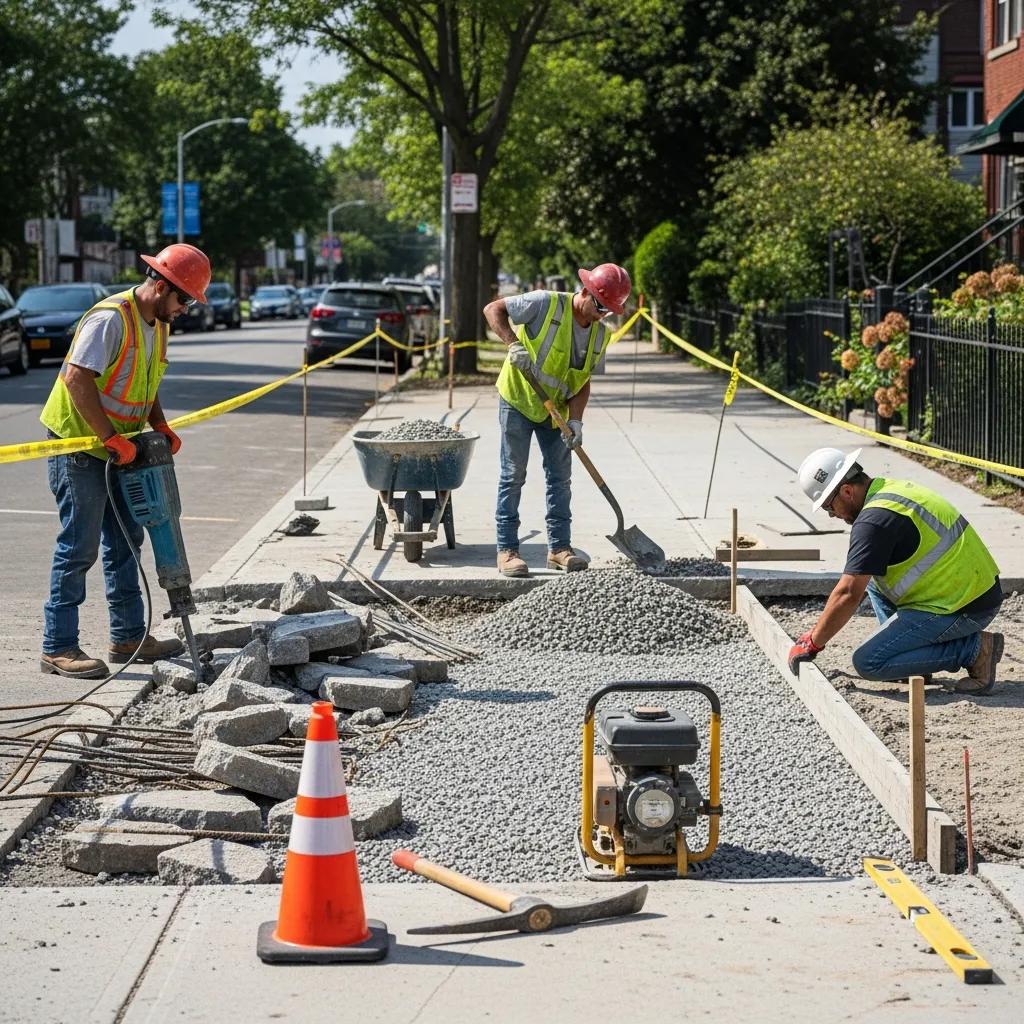
Replacement is the better choice when damage is widespread or long-term performance is needed.
What Damage Conditions Require Complete Sidewalk Replacement?
Replacement is typically required for:
- Severe Cracking: Widespread damage that compromises integrity.
- Significant Settling: Slabs too uneven to reliably level.
- Deterioration: Large areas of spalling or surface loss.
Replacement avoids repeated fixes and yields a uniform, durable surface.
How Does the Replacement Process Ensure Long-Term Durability?
Durable replacement follows these core steps:
- Excavation: Remove old concrete and damaged base.
- Base Preparation: Compact and grade a stable, well-draining foundation.
- Pouring New Concrete: Use the correct mix, reinforcement as needed, and proper finishing.
Good base work and drainage are essential for longevity.
How Do Costs Compare Between Concrete Sidewalk Repair and Full Replacement?
Costs depend on damage, materials, and labor; weigh upfront expense versus future maintenance.
What Factors Influence the Cost of Concrete Sidewalk Repair?
Key cost drivers:
- Extent of Damage: Larger or deeper repairs cost more.
- Materials Used: Type of patching compound or overlay affects price.
- Labor Costs: Local rates and job complexity matter.
Have a professional assess the site for an accurate estimate.
How Does Replacement Cost Different and What Are Time Considerations?
Replacement costs more initially but can reduce recurring repairs. Consider:
- Material Quality: Better mixes raise lifespan and price.
- Labor and Equipment: Heavy equipment or tight access increases cost.
- Time Considerations: Replacement usually takes longer and may limit access for several days.
Balance short-term savings against long-term durability when choosing a solution.
What Safety and Compliance Standards Affect Sidewalk Repair and Replacement?
Work must meet accessibility and local building standards; noncompliance can create liability.
Which Local Regulations Govern Sidewalk Trip Hazard Mitigation?
Typical requirements include:
- Compliance with ADA Standards: Accessible slopes, widths, and detectable warnings where required.
- Local Building Codes: Follow municipal construction and material rules.
- Inspection Requirements: Some areas require permits or periodic checks.
Confirm local rules and permits before beginning work.
How Do Safety Compliance Measures Impact Repair and Replacement Choices?
Compliance influences materials and design and can broaden project scope:
- Material Selection: Use approved, durable products to meet standards.
- Design Considerations: Non-slip finishes, proper slopes, and transitions may be required.
- Liability Concerns: Proper compliance reduces legal risk.
How Can Homeowners Maintain and Extend the Life of Concrete Sidewalks?
Regular maintenance prevents small problems from becoming major repairs.
What Are Best Practices for Concrete Sidewalk Restoration and Maintenance?
Routine tips:
- Regular Inspections: Check for cracks, movement, and drainage issues.
- Cleaning: Remove debris and stains that accelerate deterioration.
- Sealing: Reapply a sealer every few years to block moisture.
How Do Environmental Considerations Influence Sidewalk Longevity?
Manage these factors:
- Weather Conditions: Freeze-thaw cycles and extreme heat affect concrete.
- Tree Roots: Design or manage plantings to limit root damage.
- Chemical Exposure: Limit de-icing salts and harsh chemicals that speed decay.
Frequently Asked Questions
What are the signs that indicate a sidewalk needs immediate attention?
Address significant cracks, uneven surfaces, or trip hazards right away—especially cracks wider than 1/4 inch, large settled areas, or any protrusions that could cause tripping.
How long can I expect a sidewalk repair to last?
Well-made repairs typically last several years (often 5–10) depending on damage extent, materials, and conditions; regular maintenance can extend that life.
What is the typical timeline for sidewalk replacement?
Replacement commonly takes about 3–5 days for a typical section, including excavation, base prep, pouring, and initial curing; weather can affect timing.
Are there specific materials recommended for sidewalk repairs?
Use high-quality concrete patching compounds and compatible sealers; choose weather-resistant, durable products and consult a contractor for the best match.
What are the environmental impacts of sidewalk repair and replacement?
Work can generate waste and use non-eco materials, but options like recycled aggregates, permeable concrete, and good drainage reduce environmental impact.
How can I ensure my sidewalk complies with local regulations?
Check municipal codes and ADA requirements, obtain necessary permits, and work with a contractor familiar with local rules to avoid fines and ensure safety.