
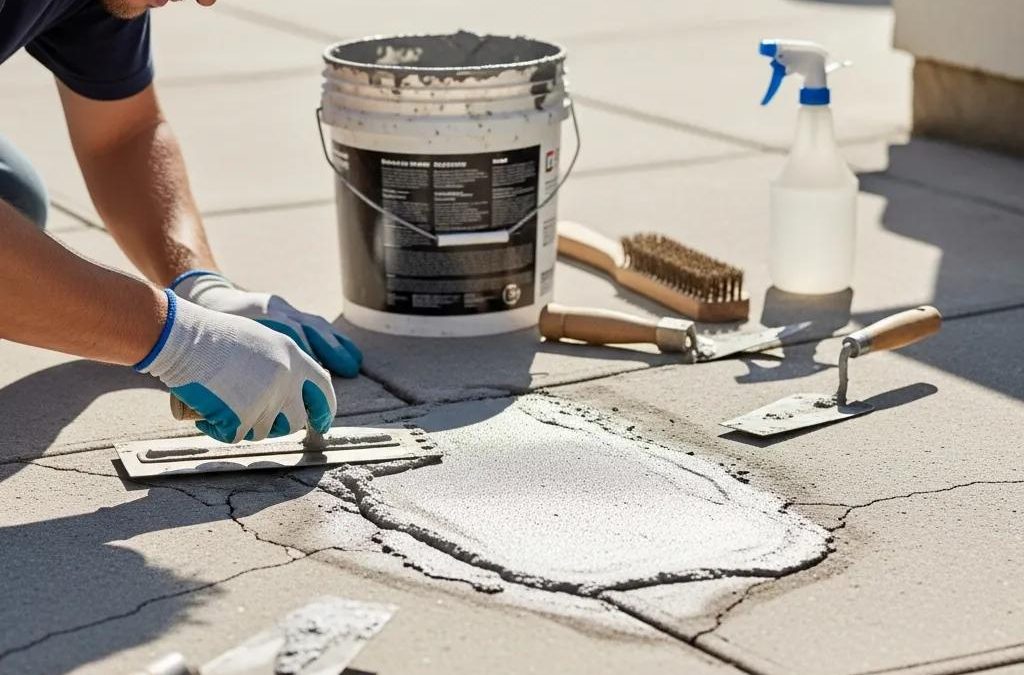
Basic Concrete Patching & Repair Guide

Basic Concrete Patching & Repair Guide: Effective Crack Repair Methods and Cost Estimates
What are the common types of concrete damage and cracks?
How to identify different concrete crack types and their causes

- Shrinkage Cracks: These occur as the concrete dries and shrinks, typically appearing as thin, hairline fractures.
- Settlement Cracks: Resulting from the ground beneath the concrete settling, these cracks can be wider and may indicate structural issues.
- Expansion Cracks: Caused by temperature changes, these cracks occur when concrete expands and contracts, often appearing as horizontal or diagonal lines.
What surface damage affects concrete longevity?
- Spalling: This occurs when the surface of the concrete flakes or chips away, often due to freeze-thaw cycles, corrosion of reinforcing steel, or de-icing salts.
- Scaling: A result of poor finishing or curing, scaling leads to a rough surface texture and can expose the aggregate beneath.
- Discoloration: Stains from oil, rust, or other substances can affect the appearance of concrete and may require cleaning or resurfacing.
How do you patch concrete: Step-by-step repair methods?
What are the best practices for surface preparation before patching?
- Cleaning the Area: Remove any debris, dirt, or loose concrete from the crack or damaged area using a wire brush or pressure washer.
- Moistening the Surface: Dampen the area with water to prevent the patching compound from drying too quickly.
- Applying a Bonding Agent: Use a bonding agent to enhance adhesion between the existing concrete and the patching material.
Concrete Surface Preparation for Repair & Overlay
To repair reinforced concrete infrastructures requests specific preparation operations needed for guaranteeing compatibility between substrate and new materials as well as the development of adhesion properties. These guidelines contain design and construction recommendations for surface preparation of concrete for repair and overlay. The paper illustrates current knowledge, best practices and results of the research concerning the surface preparation of concrete prior to application of repair/overlay materials.
Guidelines for concrete surface preparation: 10 years research and experience, L Courard, 2018
Which repair techniques suit various crack and surface damage types?
- Epoxy Injection: Ideal for structural cracks, this method involves injecting epoxy resin into the crack to bond the concrete and restore its strength.
- Cement Resurfacing: This technique is effective for scaling and spalling, where a thin layer of cement-based overlay is applied over the surface to restore its appearance and protect against further damage.
- Patching Compounds: For smaller cracks and surface defects, using a pre-mixed patching compound can provide a quick and effective solution.
Concrete Crack Diagnosis & Curative Repair Techniques
in situ diagnosis methods and repair techniques, and correlation between them. This allows the easy identification of the repair technique that is most suitable. For example, a repair file for R-C1 repair of an active crack, a curative repair, is provided.
Inspection, diagnosis, and repair system for architectural concrete surfaces, C Silva, 2017
What are the best concrete repair products and materials?

How do epoxy fillers compare to cement-based patching compounds?
| Product Type | Composition | Best Use | Advantages |
|---|---|---|---|
| Epoxy Fillers | Resin-based | Structural cracks | High strength, excellent adhesion |
| Cement-based Compounds | Cement and aggregates | Surface repairs | Easy to use, cost-effective |
Assessing Effective Concrete Patching Materials
many effective methods in preventing further deterioration is using rapid-setting patching materials. This review assesses the effectiveness of other types of patching materials and potential benefits or disadvantages
Assessment of effective patching material for concrete bridge deck-A review, N Su, 2021
What are the latest sustainable and polymer-based repair materials?
- Improved Flexibility: Polymer-modified compounds can accommodate movement in the concrete, reducing the risk of cracking.
- Faster Curing Times: Many modern materials cure more quickly than traditional options, allowing for faster project completion.
- Eco-Friendly Formulations: Sustainable products often use recycled materials or have lower volatile organic compound (VOC) emissions.
How much does concrete repair cost and how long does it take?
What are local cost estimates for concrete patching services in Syracuse, NY?
- Crack Sealing: $100 - $300 per crack, depending on crack size and depth
- Surface Patching: $3 - $7 per square foot, depending on the severity of damage
- Epoxy Injection: $250 - $800 depending on the size and complexity of the crack
How do repair duration and material choice affect overall cost?
- Quick-setting compounds may allow for repairs to be completed in a day, while traditional methods could take several days to cure fully.
- Labor costs can also vary based on the repair method; more complex techniques like epoxy injection may require specialized labor, increasing overall costs.
What maintenance and prevention tips extend concrete surface life?
How to prevent common causes of concrete surface damage?
- Sealing: Applying a concrete sealer can protect against moisture infiltration and freeze-thaw damage.
- Regular Cleaning: Keeping surfaces clean from debris and stains can prevent deterioration.
- Proper Drainage: Ensuring adequate drainage around concrete surfaces can prevent water accumulation and related damage.
When should you schedule professional inspections and repairs?
- Annual Inspections: A yearly check can help catch early signs of damage.
- Post-Storm Assessments: After severe weather events, inspecting for cracks or surface damage is crucial.
- Before Major Projects: If planning to overlay or resurface concrete, a professional assessment can ensure the underlying structure is sound.
Concrete Crack Repair: Methods, Materials & Cost Estimates
What tailored repair solutions does Morici Bros offer in Syracuse?
- Custom Crack Repair: Addressing various types of cracks with appropriate techniques.
- Surface Restoration: Utilizing advanced materials for effective surface repairs.
- Consultation Services: Offering expert advice on maintenance and prevention strategies.