
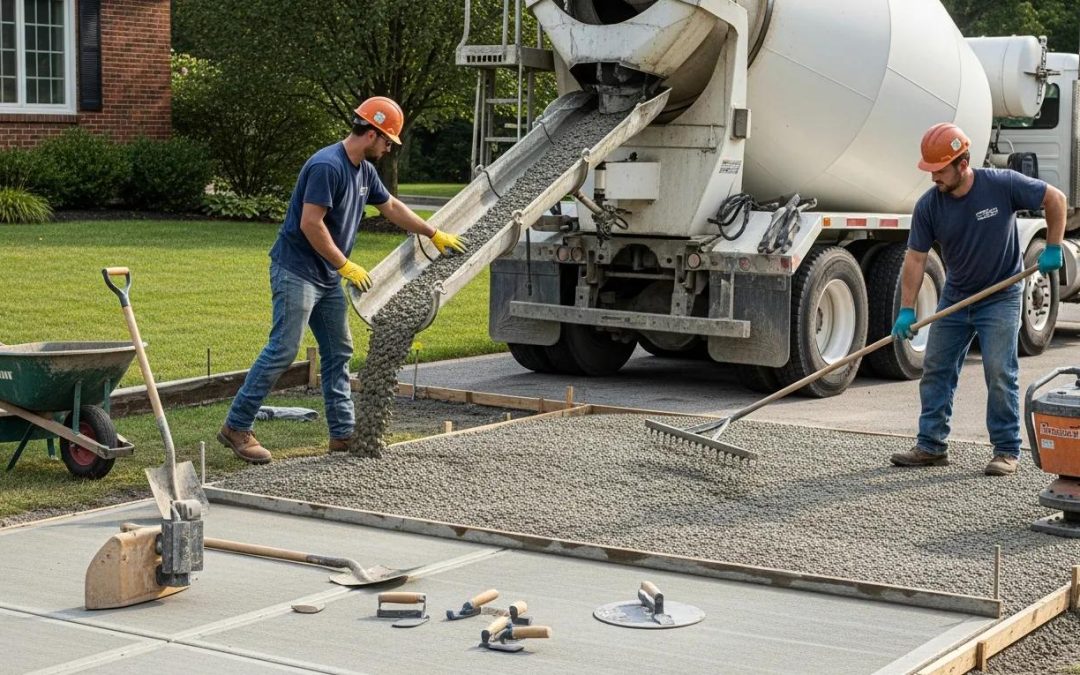
How Concrete Driveways Are Installed: A Step-by-Step Overview
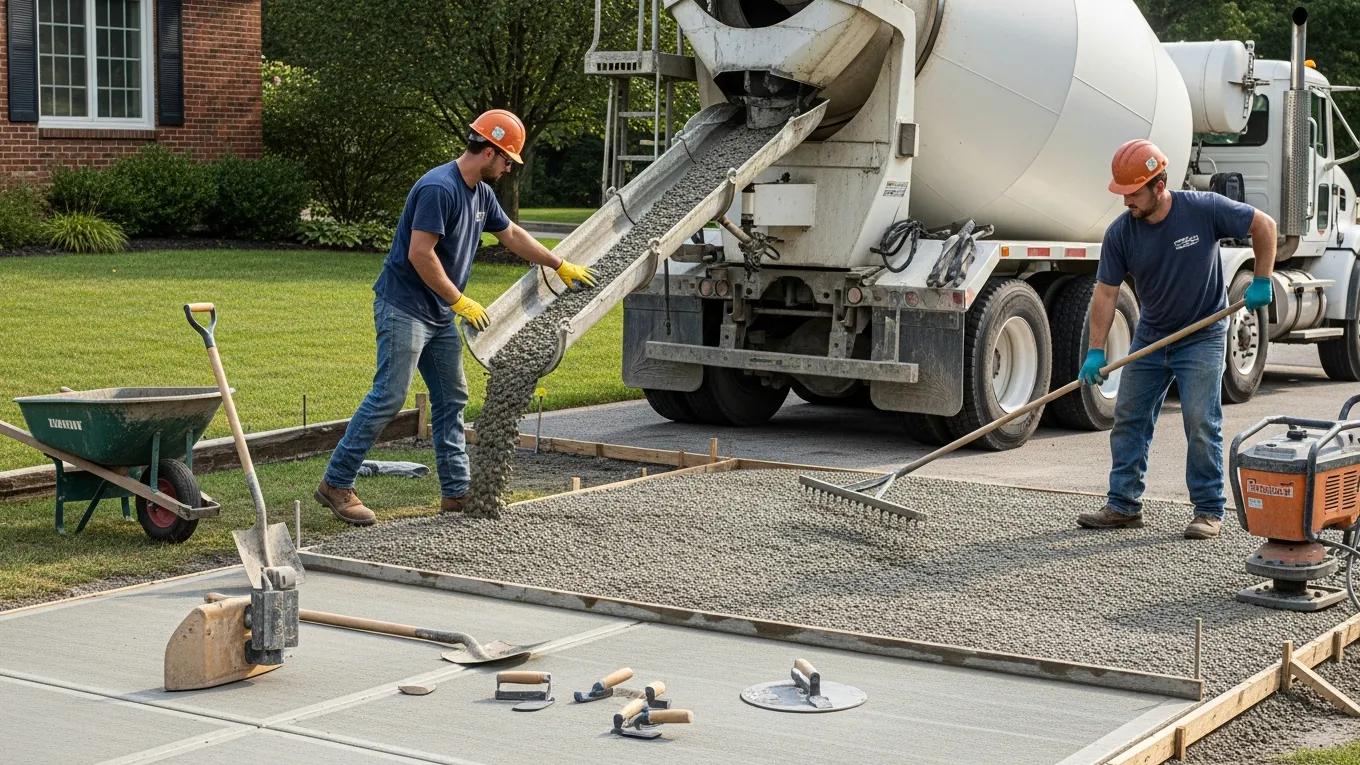
How Concrete Driveways Are Installed: A Step-by-Step Overview
Concrete driveways are a durable, low‑maintenance option for many homeowners. This guide summarizes the installation process from initial assessment through curing and sealing, so you can plan a longer‑lasting driveway and avoid common mistakes.
What Are the Essential Steps in Concrete Driveway Preparation?
Preparation establishes the conditions for a stable, long‑lasting slab. Key tasks focus on site, materials, and subgrade.
- Site Assessment: Evaluate layout, slopes, and constraints to set drainage and access needs.
- Material Selection: Choose a concrete mix and reinforcement suited to local climate and traffic loads.
- Subgrade Preparation: Compact and level the soil to provide a uniform support layer.
How Is Site Preparation Conducted for Durable Concrete Driveways?
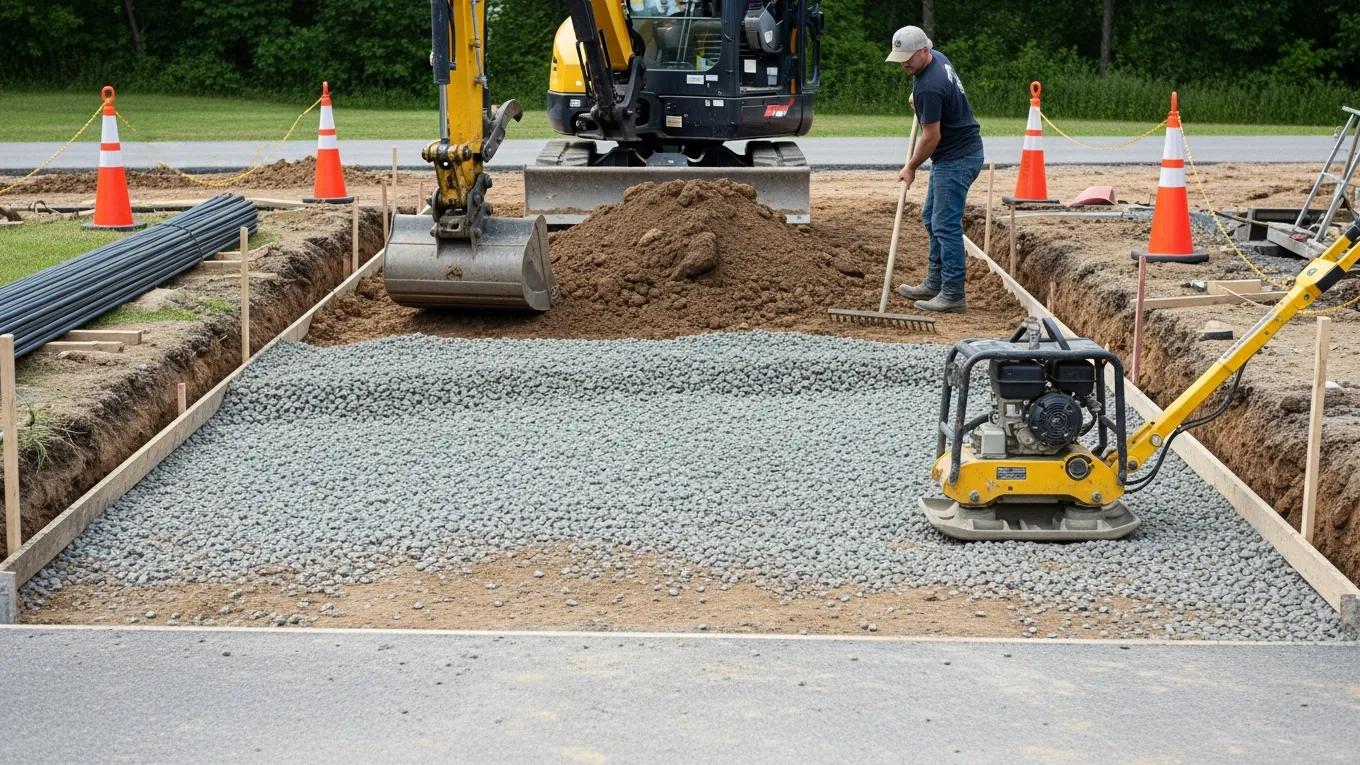
Site preparation readies the area for reliable pouring and drainage.
- Clearing the Area: Remove vegetation, debris, and old pavement.
- Excavation: Dig to the required depth (commonly 4–8 inches depending on use).
- Grading the Soil: Establish proper slope so water drains away from structures.
Which Excavation and Grading Techniques Ensure Proper Foundation?
Use proven techniques to avoid settlement and drainage problems.
- Soil Compaction: Compact to remove voids and increase bearing capacity.
- Sub-base Preparation: Place crushed stone or gravel to improve drainage and support.
- Final Checks: Verify elevations and slope before placing formwork.
What Are the Best Practices for Formwork and Reinforcement Installation?
Careful formwork and correct reinforcement placement control shape and cracking.
- Material Selection: Use sturdy plywood or metal forms that hold shape during pouring.
- Proper Alignment and Leveling: Set forms to the desired slope and elevation.
- Secure Fastening: Bracing and stakes prevent movement while concrete is placed.
How Do Formwork Methods Support Concrete Driveway Shape and Stability?
Well-built forms define the slab edges, control slope for drainage, and keep the slab dimensions consistent while concrete cures.
What Reinforcement Materials Are Used to Enhance Driveway Strength?
Common reinforcement options include rebar and welded wire mesh. They reduce cracking and distribute loads when placed at the proper height within the slab.
- Benefits of Reinforcement: Improves crack control and structural performance.
- Installation Techniques: Position reinforcement on chairs or spacers so it is embedded within the concrete, not resting on the sub-base.
How Is Concrete Pouring and Finishing Performed for Optimal Results?
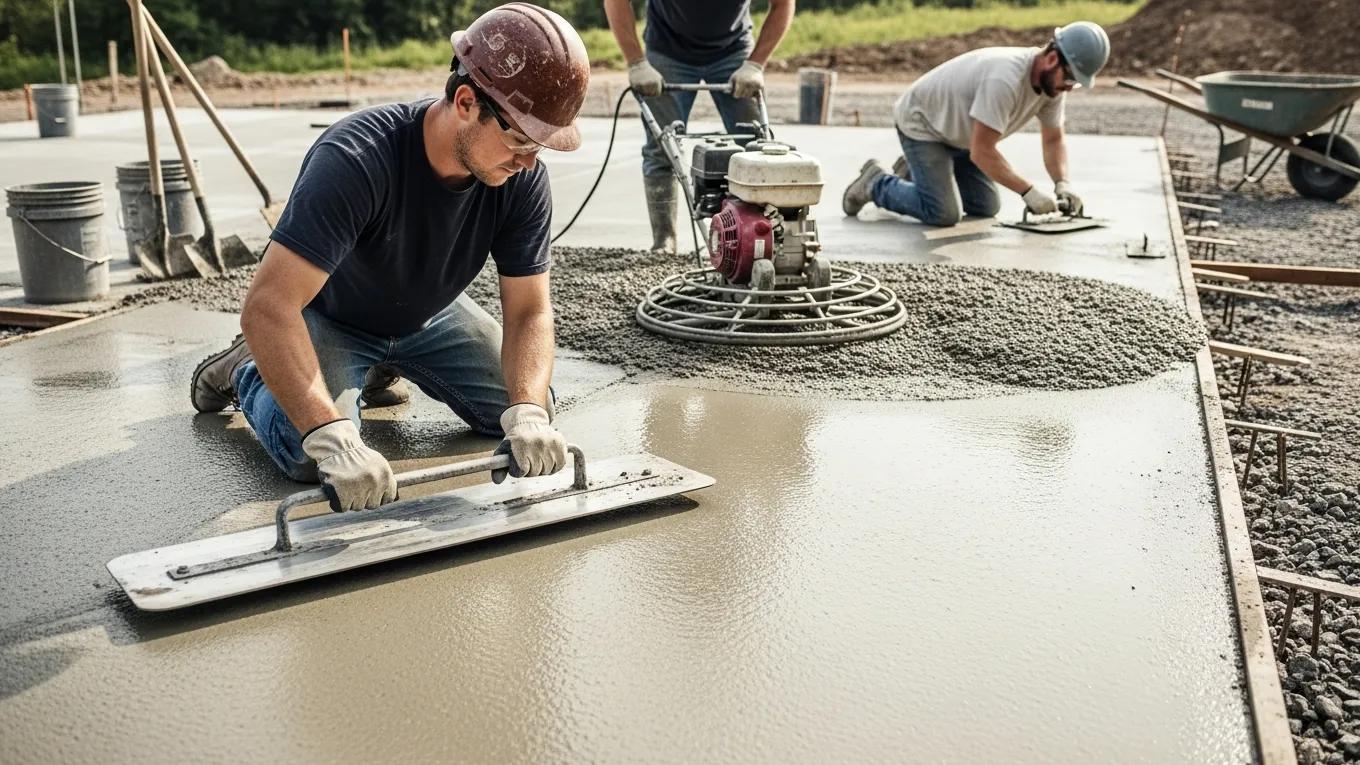
Proper mixing, placement, and finishing determine surface quality and durability.
- Mixing and Pouring: Use consistent, properly mixed concrete and place it without segregation.
- Finishing Techniques: Strike off, float, and apply a final texture for traction.
What Are Effective Concrete Pouring Techniques for Even Driveway Surfaces?
Use screeds and floats to level the slab and vibration or tamping (when appropriate) to consolidate the mix and remove air pockets.
- Surface Smoothing: Screed to a uniform thickness, then float for a consistent finish.
- Vibration Techniques: Apply vibration carefully on larger pours to eliminate voids.
These steps help produce a flat, strong surface that performs well under traffic.
Which Finishing Methods Improve Driveway Texture and Durability?
Choose a finish that balances appearance, traction, and maintenance needs.
- Texturing Methods: Broomed surfaces improve traction; stamping or coloring add aesthetics.
- Use of High-Quality Concrete Mixes: Concrete designed for pavements improves long‑term resistance to cracking.
Why Is Proper Curing Time Critical for Concrete Driveway Longevity?
Curing allows concrete to hydrate and develop strength; inadequate curing leads to weak, cracked surfaces.
- Strength Development: Maintain moisture so the mix achieves intended strength.
- Durability: Proper curing reduces surface crazing and long‑term deterioration.
- Maintenance Recommendations: Follow curing guidelines for the mix and climate.
How Does Curing Time Affect Concrete Driveway Durability in Milwaukee’s Climate?
In colder or variable climates, control moisture and temperature during curing to avoid rapid drying or freeze‑thaw damage.
- Moisture Retention: Keep the surface damp with curing blankets, plastic, or wet coverings as recommended.
- Temperature Management: Protect fresh concrete from freezing and extreme temperature swings while strength develops.
What Sealing Processes Protect Concrete Driveways from Weathering?
Sealers add a protective layer that reduces moisture penetration, staining, and surface wear.
- Application Methods: Apply according to product instructions when the concrete has gained adequate strength.
- Types of Sealants: Penetrating sealers preserve breathability; topical coatings offer surface protection.
- Effectiveness Against Environmental Factors: Regular sealing helps limit damage from rain, snow, and deicing agents.
To learn more about our services, contact us today.
Many homeowners in the area trust us for their concrete needs. If you’re looking for reliable concrete services, we’re here to help.
Frequently Asked Questions
What is the average cost of installing a concrete driveway?
Costs vary by size, thickness, finish, and location. Expect a broad range—obtain multiple quotes and compare what each includes (site prep, reinforcement, finishes) rather than only the per‑square‑foot price.
How long does it take for a concrete driveway to cure?
Typical curing ranges from about one to four weeks for most concrete mixes. The surface may be walkable in 24–48 hours, but full strength develops over several weeks depending on temperature and moisture control.
Can I install a concrete driveway myself?
DIY is possible but requires experience, proper tools, and helpers for placing and finishing. For larger or complex projects, a professional helps ensure correct grades, reinforcement, and long‑term performance.
What maintenance is required for concrete driveways?
Keep the surface clean, repair small cracks promptly, and reseal periodically (typically every 1–3 years depending on sealant type and exposure) to protect against moisture and stains.
What are the benefits of using decorative concrete for driveways?
Decorative options (stamping, staining, coloring) enhance curb appeal while retaining concrete’s durability. They can also add texture for improved traction.
How does weather affect the installation of concrete driveways?
Do not pour in extremes. Ideal temperatures are moderate; very hot, cold, or wet weather complicates mixing, placing, and curing. Schedule pours when conditions allow proper curing and protection.
What should I do if my concrete driveway cracks?
Small cracks can be sealed or patched to prevent water intrusion. For larger or structural cracking, consult a contractor to diagnose causes (subgrade, reinforcement, drainage) and recommend repair or replacement.