
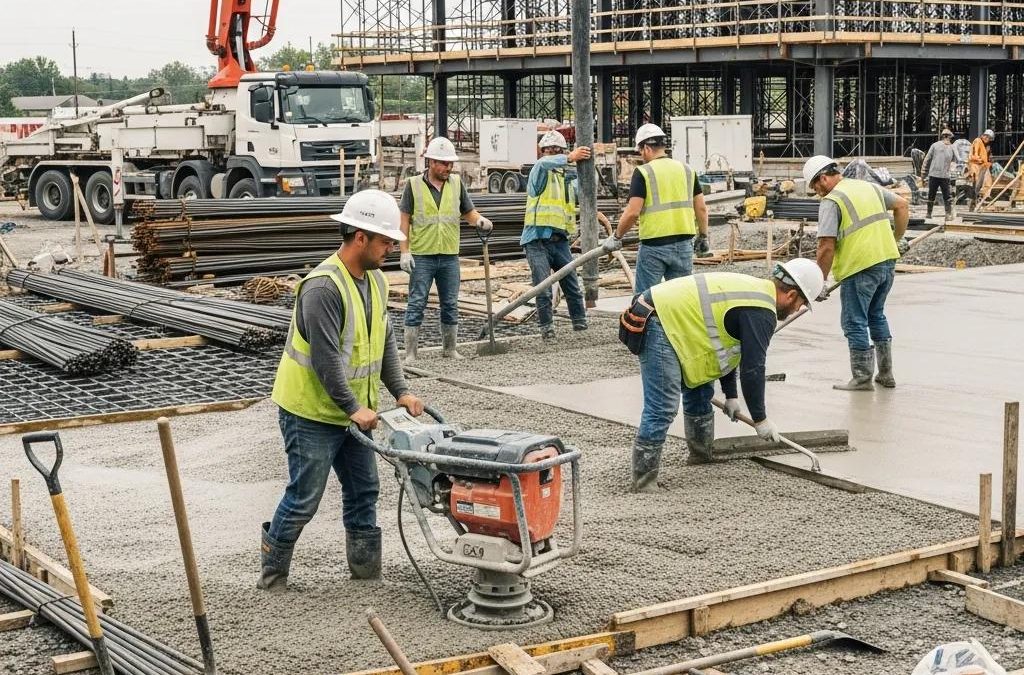
Recommended Thickness for Various Applications
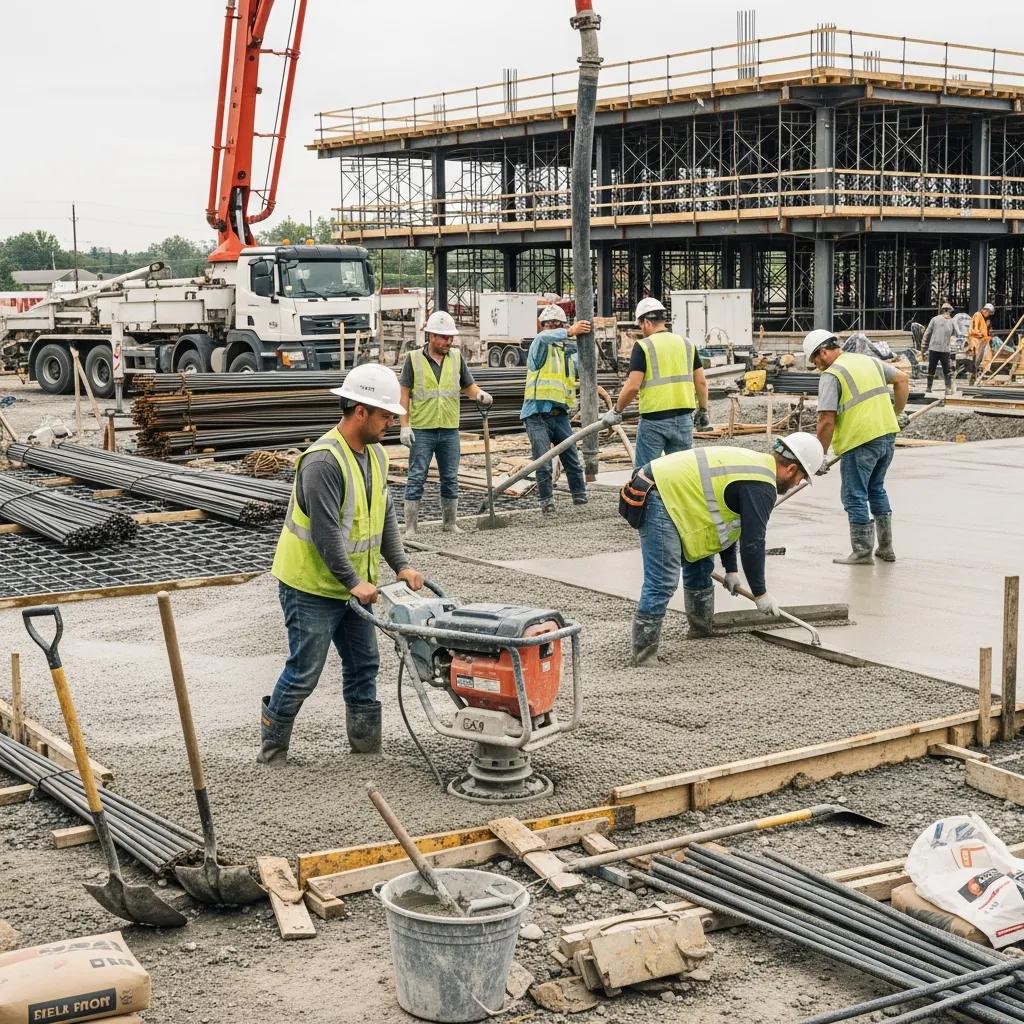
Construction workers pouring concrete for a slab, showcasing proper thickness and techniques for durability in construction projects.

Recommended Concrete Slab Thickness Guidelines for Various Applications

Choosing the right thickness for concrete slabs is crucial for ensuring durability and structural integrity across various applications. This article will provide comprehensive guidelines on recommended concrete slab thickness for different uses, including residential and commercial projects. Understanding the appropriate thickness can prevent issues such as cracking and structural failure, which can lead to costly repairs. We will explore the minimum thickness requirements for residential patios, sidewalks, driveways, and foundations, as well as best practices for reinforcement and curing. Additionally, we will discuss how to calculate and optimize concrete slab thickness for cost-effectiveness and sustainability.

Concrete Slab Thickness Guidelines for Patios, Driveways & Foundations

Concrete slab thickness varies significantly based on the application, with specific standards established to ensure safety and durability. The following table outlines the recommended thickness for various concrete applications:

Application TypeRecommended Thickness
Residential Patios4 inches
Sidewalks4 inches
Driveways4-6 inches
Commercial Slabs6-8 inches
Foundations8-12 inches

Understanding these standards is essential for both homeowners and contractors to ensure that the concrete can withstand the intended load and environmental conditions.

What Is the Minimum Concrete Thickness for Residential Patios and Sidewalks?

For residential patios and sidewalks, the minimum concrete thickness is typically 4 inches. This thickness provides adequate support for foot traffic and light loads, ensuring durability and longevity. Thicker slabs may be necessary in areas with heavy foot traffic or where additional support is required due to soil conditions. Local building codes may also dictate specific thickness requirements, so it is essential to consult these regulations before installation.

How Thick Should Driveway Concrete Slabs Be for Durability?

Driveway concrete slabs should generally be between 4 to 6 inches thick, depending on the expected load. A thickness of 4 inches is suitable for passenger vehicles, while a thickness of 6 inches is recommended for heavier vehicles or in areas with frequent heavy traffic. Proper thickness not only enhances durability but also minimizes the risk of cracking and other structural issues over time. Local building codes may also influence the required thickness, so it is advisable to check these guidelines.

How Do Foundation Slab Thickness Requirements Vary for Structural Integrity?
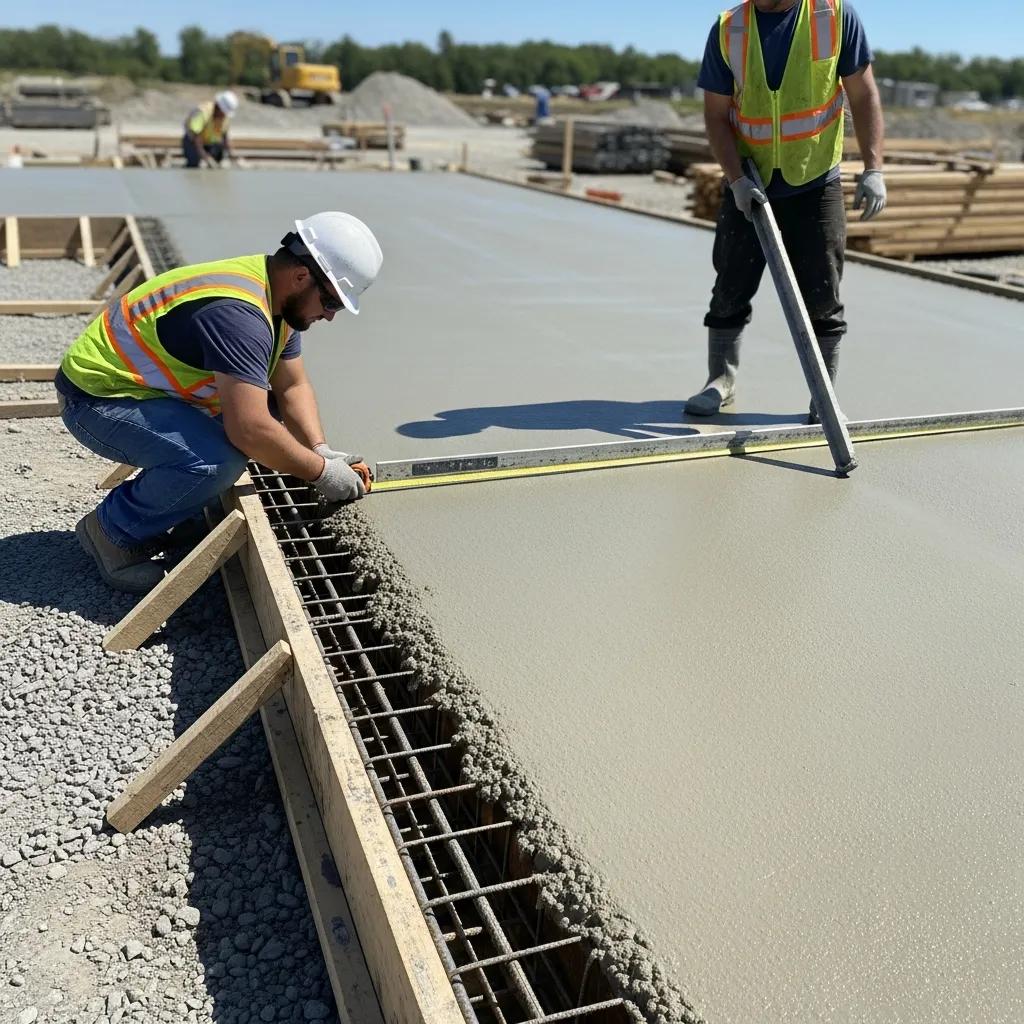
Construction workers measuring concrete slab thickness for foundation, emphasizing importance of proper thickness for structural integrity.

Foundation slabs are critical for the overall stability of a structure, and their thickness can vary based on several factors, including soil conditions and building type. Generally, foundation slabs should be between 8 to 12 inches thick to provide adequate support for the structure above.

Further research highlights the complex interplay of soil and structural features in residential slab foundation design, often requiring advanced analytical methods.

Deep Learning for Residential Slab Foundation Design

The deep learning models were used to create design lines, which showed that both soil and structural features strongly influence the stiffened rafts. The results of the deep learning models led to non-linear design curves, which are disparate from the suggested standard Australian design. These results suggest that increasing the value of beam depth can have a positive or negative impact on the global residential slab depending on the type of substructure and whether the founding reactive soil is shrinking or swelling.

Prediction of residential slab foundation movement through a finite element-based deep learning algorithm, B Teodosio, 2011

What Are the Recommended Thickness Standards for Commercial Foundation Slabs?

For commercial foundation slabs, the recommended thickness typically ranges from 6 to 8 inches. This thickness is designed to support heavier loads associated with commercial buildings, ensuring structural integrity and safety. Factors such as soil type, load-bearing requirements, and local building codes should be considered when determining the appropriate thickness for commercial foundations.

How Do Local Building Codes Influence Foundation Slab Thickness?

Local building codes play a significant role in determining the required thickness for foundation slabs. These codes are established to ensure safety and structural integrity based on regional soil conditions, climate, and building practices. It is crucial for contractors and builders to familiarize themselves with local regulations to ensure compliance and avoid potential issues during construction.

What Are the Best Practices for Reinforcement and Curing Affecting Concrete Thickness?
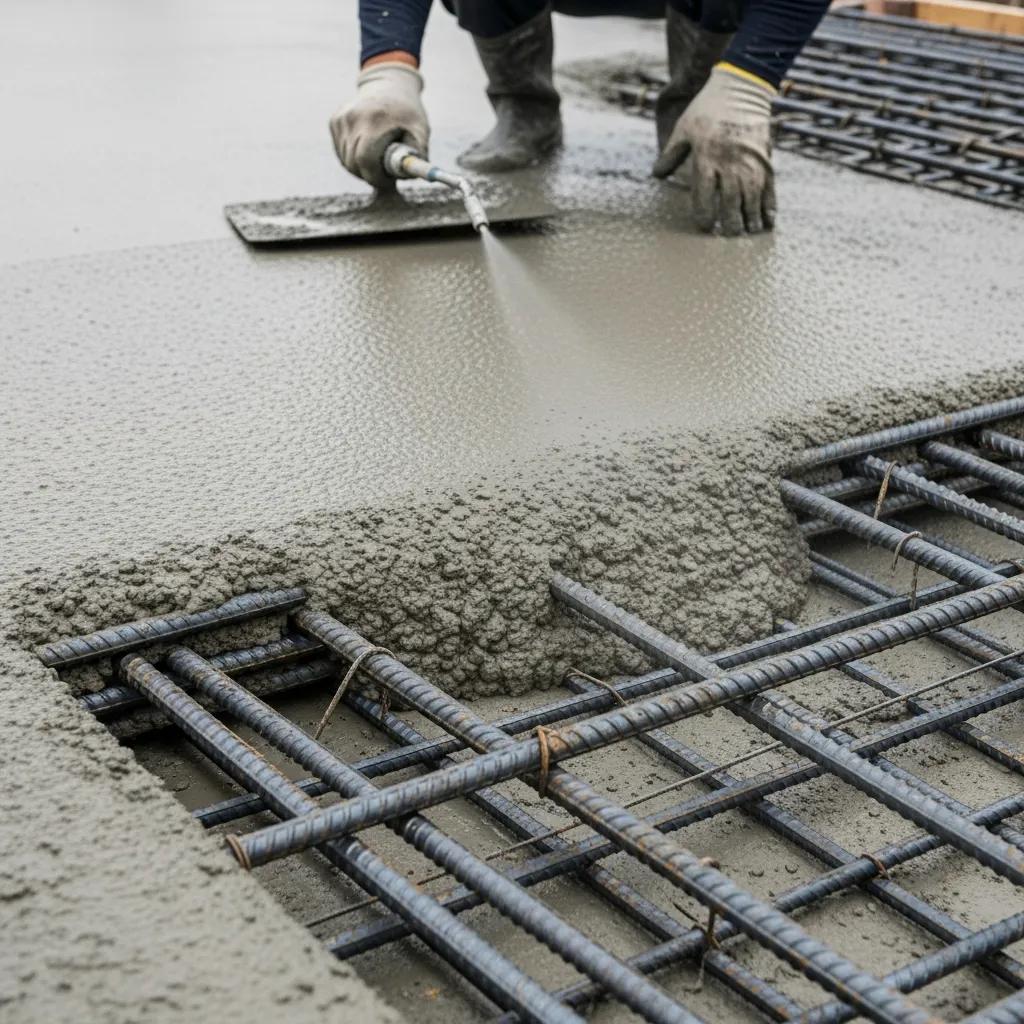
Worker applying curing compound on freshly poured concrete slab with visible reinforcement bars, illustrating best practices for concrete thickness in foundation construction.

Reinforcement and curing practices significantly impact the required thickness of concrete slabs. Proper reinforcement can enhance the strength and durability of the slab, while adequate curing ensures that the concrete achieves its full strength potential.

How Does Reinforcement Type Impact Required Concrete Slab Thickness?

The type of reinforcement used can affect the required thickness of concrete slabs. For instance, using steel rebar or wire mesh can allow for thinner slabs without compromising strength. In contrast, unreinforced slabs may require additional thickness to support the same loads. It is essential to select the appropriate reinforcement method based on the specific application and load requirements.

Specific guidelines for reinforcement further detail how these elements contribute to the overall structural integrity and optimal thickness of concrete slabs.

Reinforcement Guidelines for Concrete Slab Thickness

smaller than the slab thickness as there are usually two layers of reinforcing bars to be. When the concrete cover is 3/4 in. (19 mm) and the reinforcing bar diameter is 5 / 8 in. (16 mm),

Shear reinforcement for concrete slabs, 1981

Why Is Proper Curing Time Essential for Concrete Strength and Thickness?

Proper curing time is critical for achieving the desired strength and thickness of concrete slabs. Curing allows the concrete to hydrate and gain strength, reducing the risk of cracking and other issues. Insufficient curing can lead to weak spots and reduced durability, necessitating thicker slabs to compensate for the lack of strength. Following recommended curing practices is essential for ensuring the longevity of concrete installations.

How Can You Calculate and Optimize Concrete Slab Thickness for Cost and Sustainability?

Calculating the optimal thickness for concrete slabs involves considering various factors, including load requirements, soil conditions, and environmental impact. By optimizing thickness, it is possible to achieve cost savings and sustainability in concrete projects.

What Tools and Methods Are Used to Determine Concrete Depth Requirements?

Several tools and methods can be employed to determine the appropriate concrete depth requirements. These include soil testing, load calculations, and consultation with structural engineers. Utilizing these resources ensures that the selected thickness meets both safety and performance standards.

How Does Fiber Reinforcement Allow for Reduced Thickness Without Compromising Strength?

Fiber reinforcement is an innovative method that can reduce the required thickness of concrete slabs while maintaining strength. By incorporating fibers into the concrete mix, it is possible to enhance tensile strength and reduce cracking, allowing for thinner slabs in certain applications. This approach not only saves material costs but also contributes to sustainability by minimizing waste.

What Are the Common Questions About Concrete Slab Thickness Answered?

Understanding common questions about concrete slab thickness can help homeowners and contractors make informed decisions regarding their projects.

What Factors Affect Concrete Slab Thickness Recommendations?

Several factors influence concrete slab thickness recommendations, including the type of application, expected load, soil conditions, and local building codes. Each of these elements plays a crucial role in determining the appropriate thickness to ensure safety and durability.

How to Ensure Compliance with Thickness Standards for Different Applications?

To ensure compliance with thickness standards, it is essential to consult local building codes and guidelines. Additionally, working with experienced contractors who understand the specific requirements for each application can help guarantee that the concrete slab meets all necessary standards.