
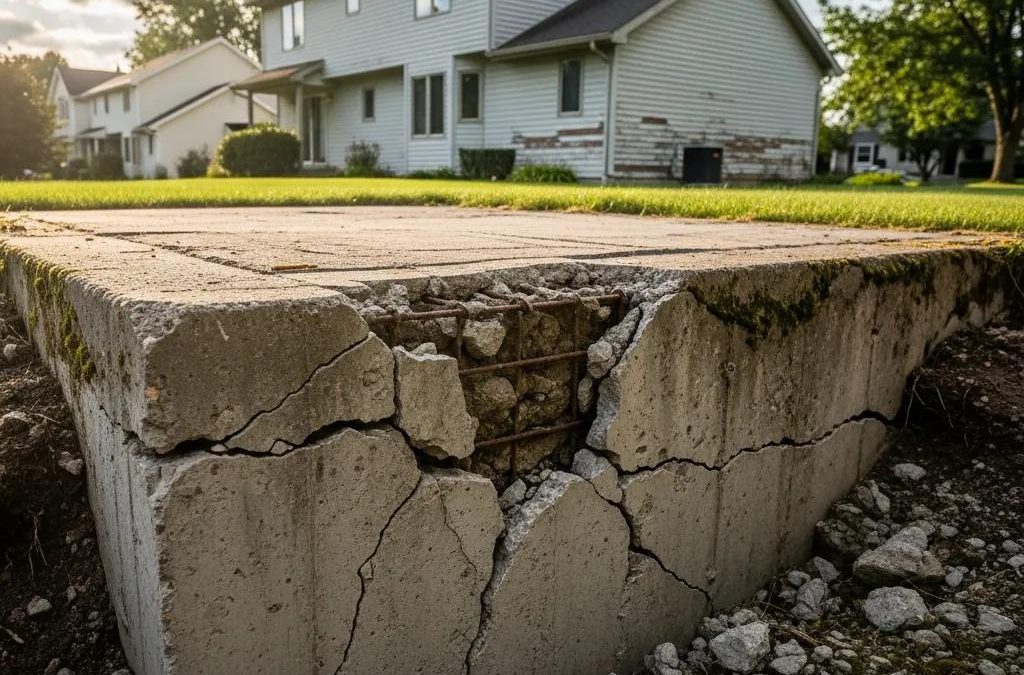
Understanding Concrete Foundation Issues

Concrete Foundation Signs, Causes & Repair Solutions in Syracuse
What Are the Common Signs of Foundation Settling and Damage?

How to Identify Foundation Settling Signs in Residential and Commercial Properties
- Cracks in Walls: Vertical or diagonal cracks in drywall or plaster can indicate settling.
- Uneven Floors: Sloping or bouncy floors may suggest foundation issues.
- Doors and Windows: Difficulty in opening or closing doors and windows can signal misalignment due to settling.
What Types of Concrete Foundation Cracks Indicate Serious Problems?
- Horizontal Cracks: Often a sign of excessive pressure from soil or water, indicating potential structural failure.
- Stair-Step Cracks: These typically appear in brick or block walls and can indicate significant settling.
- Large Cracks: Cracks wider than 1/8 inch (approximately 3 mm) may require professional evaluation, as they can signify severe foundation problems.
What Causes Concrete Foundation Cracks and Settling in Syracuse, NY?
How Do Soil Conditions and Environmental Factors Affect Foundation Stability?
- Soil Type: Clay soils can expand and contract with moisture changes, leading to foundation movement.
- Moisture Levels: Excessive moisture from heavy rains or poor drainage can weaken the foundation.
- Seasonal Changes: Freeze-thaw cycles can cause soil to shift, impacting foundation stability.
Why Aging Homes in Syracuse Are More Prone to Foundation Issues
- Deterioration of Materials: Over time, concrete and other materials can weaken, leading to cracks and settling.
- Lack of Maintenance: Older homes may not have received regular inspections or repairs, increasing vulnerability to foundation issues.
- Changes in Surrounding Environment: Development and landscaping changes can alter drainage patterns, affecting foundation stability.
Which Foundation Repair Methods and Technologies Are Most Effective?

What Are the Latest Concrete Slab Repair and Slab Leveling Techniques?
- Polyurethane Foam Injection: This method involves injecting foam beneath the slab to lift and stabilize it, providing a quick and effective solution.
- Mudjacking: A traditional method that involves pumping a cement slurry under the slab to raise it back to its original position.
- Helical Piers: These are installed deep into the ground to provide stable support for settling foundations.
How Does Foundation Waterproofing Prevent Further Damage?
- Moisture Control: Waterproofing helps keep water out of the foundation, reducing the risk of cracks and settling.
- Mold Prevention: By preventing moisture accumulation, waterproofing can help avoid mold growth, which can be harmful to health.
- Increased Longevity: A waterproofed foundation is less likely to suffer from deterioration, extending its lifespan.
How Much Does Foundation Repair Cost and What Financing Options Are Available?
What Factors Influence Foundation Repair Cost Estimates in Syracuse?
- Extent of Damage: More severe damage typically requires more extensive repairs, increasing costs.
- Type of Repair Method: Different methods have varying costs associated with materials and labor.
- Location: The specific location of the property can influence labor costs and accessibility.
Which Financing Solutions Help Homeowners Manage Repair Expenses?
- Home Equity Loans: These allow homeowners to borrow against their home’s equity to cover repair costs.
- Personal Loans: Unsecured personal loans can provide quick access to funds for repairs.
- Payment Plans: Many contractors offer financing plans that allow homeowners to pay for repairs over time.
Why Choose Morici Bros Concrete for Foundation Inspection and Repair Services in Syracuse?
What Does a Comprehensive Foundation Inspection Include?
- Visual Assessment: Inspecting the foundation for visible cracks and signs of settling.
- Soil Analysis: Evaluating the soil conditions around the foundation to identify potential issues.
- Structural Evaluation: Assessing the overall structural integrity of the building.
How Have Local Case Studies Demonstrated Our Repair Success?
- Successful Stabilization: Many homes have been stabilized using advanced repair techniques, preventing further damage.
- Customer Satisfaction: Positive feedback from clients showcases the effectiveness of our services and commitment to quality.
- Long-Term Solutions: Our repairs are designed to provide lasting results, ensuring peace of mind for homeowners.
What Are Frequently Asked Questions About Concrete Foundation Issues?
How Do I Know If My Foundation Is Settling?
- Cracks in Walls: Look for cracks that appear suddenly or worsen over time.
- Uneven Floors: Noticeable slopes or bounciness in floors can indicate settling.
- Doors and Windows: Difficulty in operation can signal misalignment due to foundation movement.
What Are the Warning Signs That Require Immediate Repair?
- Large Cracks: Cracks wider than 1/8 inch (approximately 3 mm) should be evaluated by a professional.
- Severe Bowing Walls: Walls that bow significantly may indicate structural failure.
- Water Intrusion: Water entering the basement or crawl space can lead to further damage.