
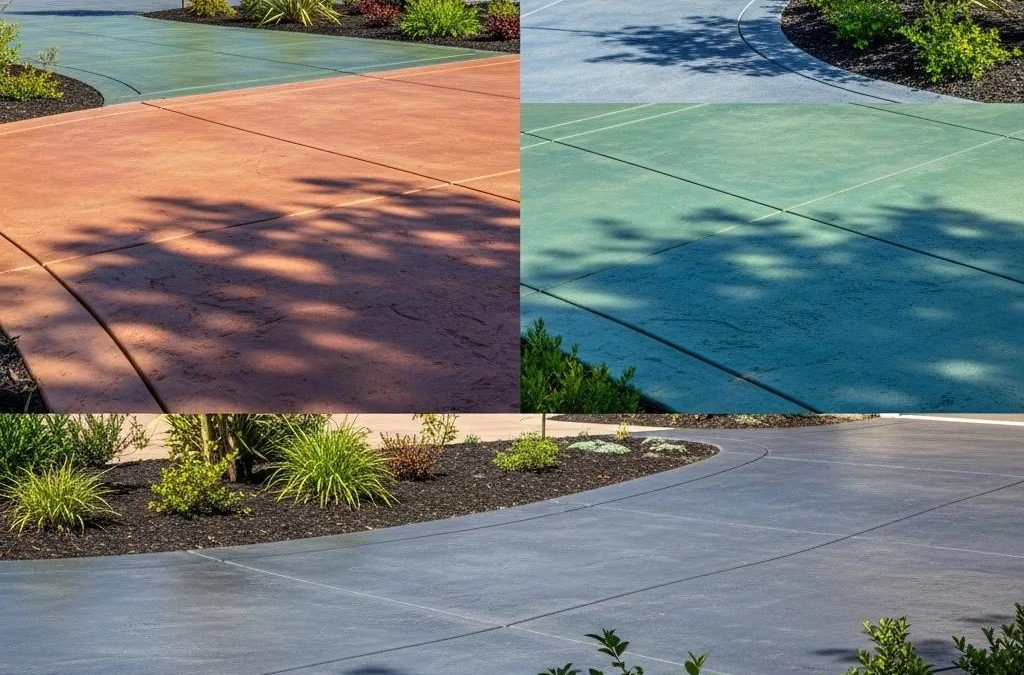
Choosing the Right Colored Concrete

Vibrant colored concrete surfaces in various textures, showcasing orange, green, and blue finishes, surrounded by landscaped gardens, illustrating options for aesthetic and durable concrete solutions.

Choosing the Right Colored Concrete: Expert Guidance on Pigments, Dyes, and Finishes for Durable and Aesthetic Results

Choosing the right colored concrete can significantly enhance the aesthetic appeal and durability of your surfaces. This guide provides expert insights into selecting the appropriate pigments, dyes, and finishes for your concrete projects. Understanding the various options available will empower you to make informed decisions that align with your design goals and functional needs. Many homeowners and contractors face challenges in selecting the right color and finish, which can lead to unsatisfactory results. By following the guidance in this article, you can achieve beautiful and long-lasting colored concrete that meets your expectations. We will explore the main types of concrete pigments, dye options, integral colors, surface finishes, maintenance practices, and cost considerations.

What Are the Main Types of Concrete Pigments and Their Benefits?

Variety of colored concrete pigments in containers, with a hand pouring red pigment into a bowl of mixed concrete, illustrating pigment selection for enhancing concrete aesthetics.

Concrete pigments are essential for achieving vibrant colors and enhancing the overall appearance of concrete surfaces. These pigments can be categorized into two main types: synthetic and natural. Synthetic pigments, such as iron oxide, offer a wide range of colors and excellent durability, while natural pigments provide earthy tones and a more organic look. The benefits of using pigments include improved color consistency, UV stability, and resistance to fading over time. Additionally, pigments do not enhance the durability of concrete structurally but can help maintain appearance by resisting color degradation from environmental factors.

Further research highlights the importance of evaluating how different pigments affect concrete properties and maintain color stability under various environmental conditions.

Pigment Effects on Concrete Properties & Color Stability

study aims to evaluate the effects of different pigments on concrete properties and investigate the color stability of pigmented fair-faced concrete under various environmental conditions.

Performance evaluation of pigmented fair-faced concrete under various environments: Mechanical properties, apparent properties, and color stability, Y Xie, 2024

How Do Iron Oxide and Other Pigments Affect Color and Durability?

Iron oxide pigments are widely used in colored concrete due to their exceptional color stability and durability. These pigments can produce a variety of shades, from deep reds to vibrant yellows, while maintaining their integrity under harsh weather conditions. The durability of iron oxide pigments is attributed to their resistance to UV light and chemical exposure, ensuring that the color remains vibrant for years. Other pigments, such as those derived from natural sources, may offer unique aesthetic qualities but may not provide the same level of UV stability and colorfastness as synthetic options.

Indeed, studies confirm that iron oxide pigments are highly valued in decorative concrete products for their robust resistance to ultraviolet radiation and external factors.

Iron Oxide Pigments for Durable Colored Concrete

Pigments are obtained mainly from iron oxides due to using nanopigments in concrete is their high resistance to ultraviolet radiation and external

Iron oxide pigment as a coloring nanofill for decorative concrete products, 2023

What Color Ranges and Effects Can Pigments Provide?

Pigments can create a vast array of colors and effects in concrete, allowing for creative expression in design. For instance, using a combination of pigments can produce marbled or variegated effects, adding depth and character to the surface. Color charts are often available from pigment manufacturers, showcasing the range of colors achievable with different pigment types. By selecting the right pigments, you can achieve the desired aesthetic while ensuring that the concrete remains durable and functional.

Which Concrete Dye Options Are Best for Your Project?

Concrete dyes are another popular option for coloring concrete surfaces. Unlike pigments, which are mixed into the concrete, dyes penetrate the surface to create a translucent color effect. This method allows for greater depth and variation in color, making it ideal for decorative applications. Dyes can be used on both new and existing concrete, providing versatility in design.

What Are the Differences Between Stains, Dyes, and Surface Treatments?

Stains, dyes, and surface treatments each offer unique benefits and applications. Stains are typically water-based or acid-based solutions that react chemically with the concrete to create a permanent color change. Dyes, on the other hand, are non-reactive and provide a more uniform, translucent color. Surface treatments, such as sealers, can enhance the color and protect the concrete from wear and tear. Understanding these differences is crucial for selecting the right method for your project.

How Do Application Techniques Influence Dye Performance?

The performance of concrete dyes can be significantly influenced by the application technique used. For instance, spraying, rolling, or brushing can yield different results in terms of color saturation and uniformity. Proper surface preparation is also essential to ensure that the dye adheres effectively. Common mistakes to avoid include applying dye to a wet surface or failing to test the dye on a small area before full application.

How Do Integral Color and Surface Finishes Enhance Colored Concrete?

Worker applying surface finish to freshly poured integral-colored concrete slab, showcasing techniques for enhancing aesthetics and durability in concrete projects.

Integral color is a method of adding color to concrete during the mixing process, resulting in a uniform color throughout the material. This technique is particularly beneficial for large areas, as it minimizes the risk of color variation. Surface finishes, such as polishing or stamping, can further enhance the appearance of colored concrete by adding texture and depth.

What Is Integral Concrete Color and When Should It Be Used?

Integral concrete color is best used when a consistent color is desired throughout the entire slab. This method is ideal for driveways, patios, and other large surfaces where uniformity is essential. By incorporating color into the mix, you can achieve a more durable and aesthetically pleasing result, as the color is less likely to fade or wear away over time.

The established performance and durability of integrally colored concrete make it a competitive choice compared to surface-applied coatings, especially for long-term applications.

Integral Colors & Coatings for Durable Concrete

, the performance and durability of integrally colored concrete has been well established on its own merits, this Study suggests that integrally colored concrete is competitive with surface

COLORED CONCRETE BRIDGES: CONSTRUCTION AND LIFE-CYCLE COST COMPARISON OF INTEGRAL COLORS AND SURFACE-APPLIED COATINGS

How Do Surface Treatments Affect Concrete Finish and Maintenance?

Surface treatments play a crucial role in the maintenance and longevity of colored concrete. Applying a sealer can protect the surface from stains, moisture, and UV damage, ensuring that the color remains vibrant. Different types of surface treatments, such as acrylic or epoxy sealers, offer varying levels of protection and aesthetic enhancement. Regular maintenance, including cleaning and resealing, is essential to preserve the appearance and durability of colored concrete.

Choosing the Right Colored Concrete: Pigments, Dyes & Finishes Guide

Maintaining colored concrete is vital for preserving its appearance and extending its lifespan. Proper care involves regular cleaning, sealing, and addressing any damage promptly. By following best practices, you can ensure that your colored concrete remains beautiful and functional for years to come.

How Should Colored Concrete Be Cleaned and Sealed?

Cleaning colored concrete should be done using mild detergents and soft brushes to avoid damaging the surface. High-pressure washing can be used cautiously but should not be excessively aggressive to prevent stripping away sealers or surface color. Sealing should be performed every 1 to 3 years, depending on the type of sealer used and the level of foot traffic the surface experiences. Regular maintenance will help prevent staining and fading.

What Repair Options Are Available for Colored Concrete Surfaces?

Repairing colored concrete surfaces can involve patching, resurfacing, or re-dyeing, depending on the extent of the damage. For minor cracks, a color-matched patching compound can be used to blend the repair with the surrounding area. In cases of significant wear or damage, resurfacing with a new layer of colored concrete or overlay may be necessary. Consulting with professionals can ensure that repairs are done effectively and maintain the integrity of the original design.

How Do Cost and Project Planning Impact Choosing Colored Concrete?

The cost of colored concrete can vary significantly based on factors such as the type of pigments or dyes used, the complexity of the design, and the size of the project. Proper project planning is essential to ensure that the desired results are achieved within budget.

What Factors Influence the Cost of Colored Concrete Installation?

Several factors influence the cost of colored concrete installation, including material costs, labor, and the complexity of the design. High-quality pigments and dyes may come at a premium, but they often provide better durability and aesthetic appeal. Additionally, intricate designs or custom finishes can increase labor costs, so it is essential to factor these elements into your budget.

How Can You Plan Your Colored Concrete Project Effectively?

Effective project planning involves setting a clear budget, selecting the right materials, and determining the desired aesthetic. It is also crucial to consider the timeline for the project and any potential weather-related delays. Working with experienced contractors, such as Morici Bros Concrete, can help ensure that your project runs smoothly and meets your expectations.

Type of ColorDescriptionBenefits
PigmentsMixed into concreteDurable, UV stable, wide color range
DyesPenetrate surfaceTranslucent effects, depth of color
StainsReact with concretePermanent color change, unique effects

This table summarizes the different types of color options available for concrete, highlighting their unique benefits and applications.

Colored concrete offers a versatile and aesthetically pleasing solution for various applications. By understanding the different types of pigments, dyes, and finishes available, you can make informed decisions that enhance the beauty and durability of your concrete surfaces. Morici Bros Concrete specializes in colored concrete installation, providing expert guidance on selecting the right options for your project. With their commitment to quality workmanship, you can achieve stunning results that stand the test of time.