
Comprehensive Concrete Industry Glossary

Construction site with workers pouring concrete, operating machinery, and handling materials, illustrating concrete industry practices and terminology.

Essential Concrete Glossary: Key Terms for Homeowners & Professionals

Concrete is a fundamental material in construction, known for its strength, durability, and versatility. This comprehensive glossary aims to provide clear definitions and explanations of essential concrete terms, making it a valuable resource for both homeowners and professionals in the industry. Readers will learn about key materials, mix design terminology, curing processes, reinforcement methods, finishing techniques, and repair terms. Understanding these concepts is crucial for anyone involved in concrete projects, whether for residential or commercial purposes. This article will guide you through the critical aspects of concrete, ensuring you have the knowledge needed to make informed decisions in your construction endeavors.

What Are the Key Concrete Materials and Their Definitions?

Different concrete materials including cement bags, aggregates in various colors, and a container of water on a table, illustrating key components essential for concrete mix design.

Concrete is composed of several key materials, each playing a vital role in its overall performance. Understanding these materials is essential for anyone looking to work with concrete effectively. The primary components include cement, aggregates, and water, which together create a strong and durable building material.

How Is Cement Defined and What Are Its Types?

Cement is a fine powder that acts as a binder in concrete, holding the aggregates together. There are several types of cement, including Portland cement, which is the most commonly used. Other types include blended cement, which combines different materials to enhance specific properties, and specialty cements designed for particular applications, such as high-strength or quick-setting formulations. Each type of cement has unique characteristics that influence the performance of the concrete mix.

What Are Aggregates and Their Role in Concrete Mixes?

Aggregates are granular materials, such as sand, gravel, or crushed stone, that are mixed with cement and water to form concrete. They provide bulk and strength to the concrete, affecting its overall durability and workability. The size and type of aggregates used can significantly impact the concrete’s properties, including its strength, shrinkage, and resistance to cracking. Proper selection and grading of aggregates are crucial for achieving optimal concrete performance.

Morici Bros Concrete specializes in concrete installation and repair services, ensuring that the right materials are used for each project to achieve the best results.

Which Concrete Mix Design Terms Should You Know?

Concrete mix design is a critical aspect of concrete construction, determining the proportions of materials used to achieve desired strength and durability. Familiarity with key mix design terms is essential for anyone involved in concrete work.

What Is Concrete Mix Design and Its Common Terminology?

Concrete mix design refers to the process of selecting the right proportions of cement, aggregates, water, and additives to create a concrete mix that meets specific performance criteria. Common terminology includes the water-cement ratio, which is the ratio of water to cement in the mix, and admixtures, which are chemical additives that enhance certain properties of the concrete, such as workability or setting time. Understanding these terms helps ensure that the concrete mix is tailored to the project’s requirements.

How Do Water-Cement Ratio and Admixtures Affect Concrete?

The water-cement ratio is a crucial factor in determining the strength and durability of concrete. A lower water-cement ratio typically results in stronger concrete, while a higher ratio can lead to increased porosity and reduced strength. Admixtures, on the other hand, can modify the properties of the concrete mix, improving workability, reducing water content, or accelerating curing time. Properly managing these factors is essential for achieving high-quality concrete.

What Are the Essential Concrete Curing Processes and Their Importance?

Curing is the process of maintaining adequate moisture, temperature, and time to allow the concrete to achieve its desired strength and durability. Understanding curing processes is vital for ensuring the longevity of concrete structures.

What Does Concrete Curing Mean and How Is It Performed?

Concrete curing involves methods to retain moisture in the concrete after it has been placed. This can be achieved through various techniques, such as covering the surface with wet burlap, applying curing compounds, or using water sprays. Proper curing is essential as it helps prevent cracking and ensures that the concrete reaches its full strength potential. The duration and method of curing depend on factors such as the type of concrete mix and environmental conditions.

Which Advanced Curing Technologies Are Used in the Industry?

Advanced curing technologies include methods such as steam curing, which accelerates the curing process by applying heat and moisture, and membrane curing, which involves applying a film-forming compound to retain moisture. These technologies can significantly enhance the curing process, leading to improved concrete performance and reduced construction time. Understanding these methods allows professionals to select the most effective curing strategy for their projects.

However, it’s important to consider the long-term implications of certain advanced curing methods, such as steam curing, on concrete properties.

Impact of Steam Curing on Concrete Properties

This study presents the effect of steam curing regime application on concrete properties. Steam curing has a negative effect on the long-term performance of concrete.

Review on effect of steam curing on behavior of concrete, AM Zeyad, 2022

How Is Concrete Reinforced and What Are Common Reinforcement Terms?

Reinforcement is a critical aspect of concrete construction, enhancing its tensile strength and overall durability. Familiarity with reinforcement terminology is essential for effective concrete design.

What Types of Reinforcement Are Used in Concrete Construction?

Common types of reinforcement used in concrete construction include steel rebar, welded wire fabric, and fiber reinforcement. Steel rebar is the most widely used, providing tensile strength to counteract the natural weakness of concrete in tension. Welded wire fabric consists of a grid of steel wires that help distribute loads, while fiber reinforcement involves adding synthetic or natural fibers to the concrete mix to improve crack resistance and overall performance.

How Does Steel Rebar Function as Concrete Reinforcement?

Steel rebar functions as a tension element in concrete, helping to absorb tensile forces that the concrete alone cannot withstand. The bond between the rebar and concrete is crucial for effective load transfer, ensuring that the two materials work together to resist bending and shear forces. Proper placement and sizing of rebar are essential for achieving the desired structural integrity in concrete elements.

What Are Common Concrete Finishing Techniques and Terminology?
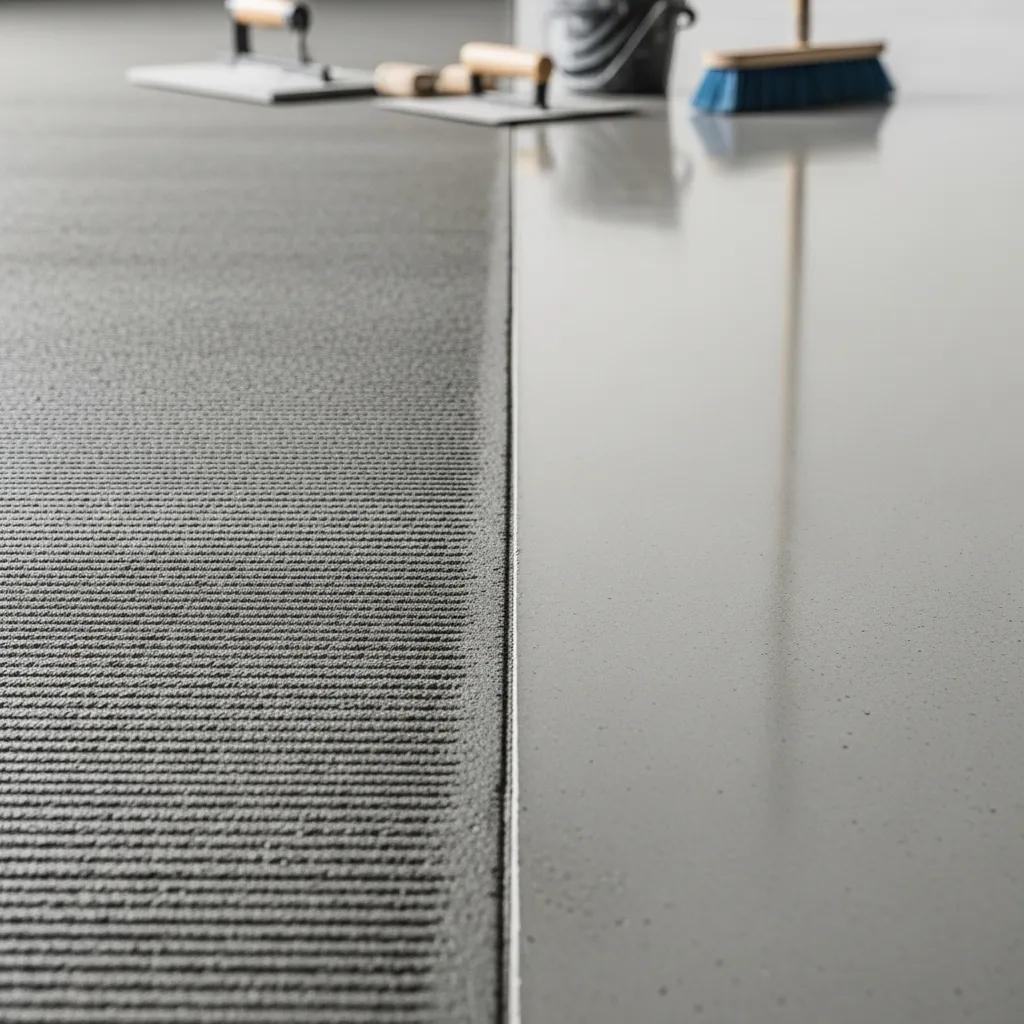
Freshly finished concrete surface showcasing broom finish on one side and polished finish on the other, with finishing tools in the background.

Finishing techniques are applied to the surface of concrete to enhance its appearance and durability. Understanding these techniques is important for achieving the desired aesthetic and functional qualities.

Which Concrete Finishing Styles Are Most Popular?

Popular concrete finishing styles include broom finish, which provides a textured surface for slip resistance, and polished finish, which creates a smooth, reflective surface. Other styles include stamped concrete, which mimics the appearance of natural stone or brick, and exposed aggregate, which reveals the decorative aggregates on the surface. Each finishing style serves different aesthetic and functional purposes, making it essential to choose the right technique for the project.

How Do Finishing Techniques Affect Concrete Durability and Appearance?

Finishing techniques can significantly impact the durability and appearance of concrete surfaces. For example, a broom finish enhances slip resistance, making it ideal for outdoor surfaces, while a polished finish can improve aesthetics and ease of cleaning. Additionally, the choice of finishing technique can influence the concrete’s resistance to weathering and wear, highlighting the importance of selecting the appropriate method based on the intended use of the concrete.

Ensuring the quality of these finishes is paramount for both aesthetic appeal and long-term performance, as highlighted by various quality control methods.

QSI Method for Concrete Surface Finish Quality

The QSI method can simplify quality control of surface finish in architectural concrete. It is suitable for inspections in small projects.

QSI methods for determining the quality of the surface finish of concrete, 2018

What Are Typical Concrete Repair Terms and Methods?

Concrete repair is an essential aspect of maintaining the integrity and longevity of concrete structures. Familiarity with repair terminology and methods is crucial for effective maintenance.

What Are Common Concrete Repair Techniques and Their Definitions?

Common concrete repair techniques include patching, which involves filling cracks or voids with a repair material, and resurfacing, which applies a new layer of concrete over the existing surface. Other methods include injection, where epoxy or polyurethane is injected into cracks to restore structural integrity, and slab jacking, which raises sunken concrete slabs by injecting a material beneath them. Each technique serves specific purposes and is chosen based on the type and extent of damage.

How Do Repair Methods Extend Concrete Lifespan?

Effective repair methods can significantly extend the lifespan of concrete structures by addressing issues before they worsen. For instance, timely crack sealing prevents water infiltration, which can lead to further deterioration. Regular maintenance and repair not only enhance the appearance of concrete but also ensure its structural integrity, ultimately saving costs associated with extensive repairs or replacements in the future.

Indeed, a holistic approach to concrete repair and maintenance is crucial for extending the service life of existing structures and addressing common issues like reinforcement corrosion.

Concrete Repair & Service Life Extension Strategies

Concrete structures are facing increasing aging, leading to a rising demand for maintenance, repair, strengthening and/or replacement. More than 70% of the damage to reinforced concrete structures is linked to reinforcement corrosion, which can affect the durability of the structure and the residual load-carrying capacity. Actions are required which consist of an adequate diagnosis, including the identification of damage mechanisms and causes, severity and the extent of defects, showing the cause and extent of the damage, (i) to determine the actual bearing capacity, (ii) to make an estimation of the technical durability and the residual service life and (iii) to select a durable repair technique and/or maintenance strategy (pro-active vs. re-active).

Durable and sustainable service life extension of existing concrete structures: a holistic approach within a life cycle perspective, N Renne, 2025

MaterialDefinitionRole
CementA fine powder that binds aggregatesActs as a binder in concrete
AggregatesGranular materials like sand and gravelProvides bulk and strength
WaterEssential for hydration of cementActivates the chemical reaction for curing

This table summarizes the key materials used in concrete and their respective roles, highlighting the importance of each component in achieving a durable and strong concrete mix.

Mix Design TermDescriptionImportance
Water-Cement RatioRatio of water to cement in the mixAffects strength and durability
AdmixturesChemical additives to enhance propertiesImproves workability and performance
CuringProcess of maintaining moisture and temperatureEssential for strength development

This table outlines critical mix design terms, emphasizing their significance in concrete performance and quality.

Concrete is a complex material that requires a thorough understanding of its components, mix design, curing processes, reinforcement methods, finishing techniques, and repair strategies. By familiarizing yourself with these essential terms and concepts, you can make informed decisions in your concrete projects, ensuring successful outcomes and long-lasting results.