Understanding Different Concrete Types

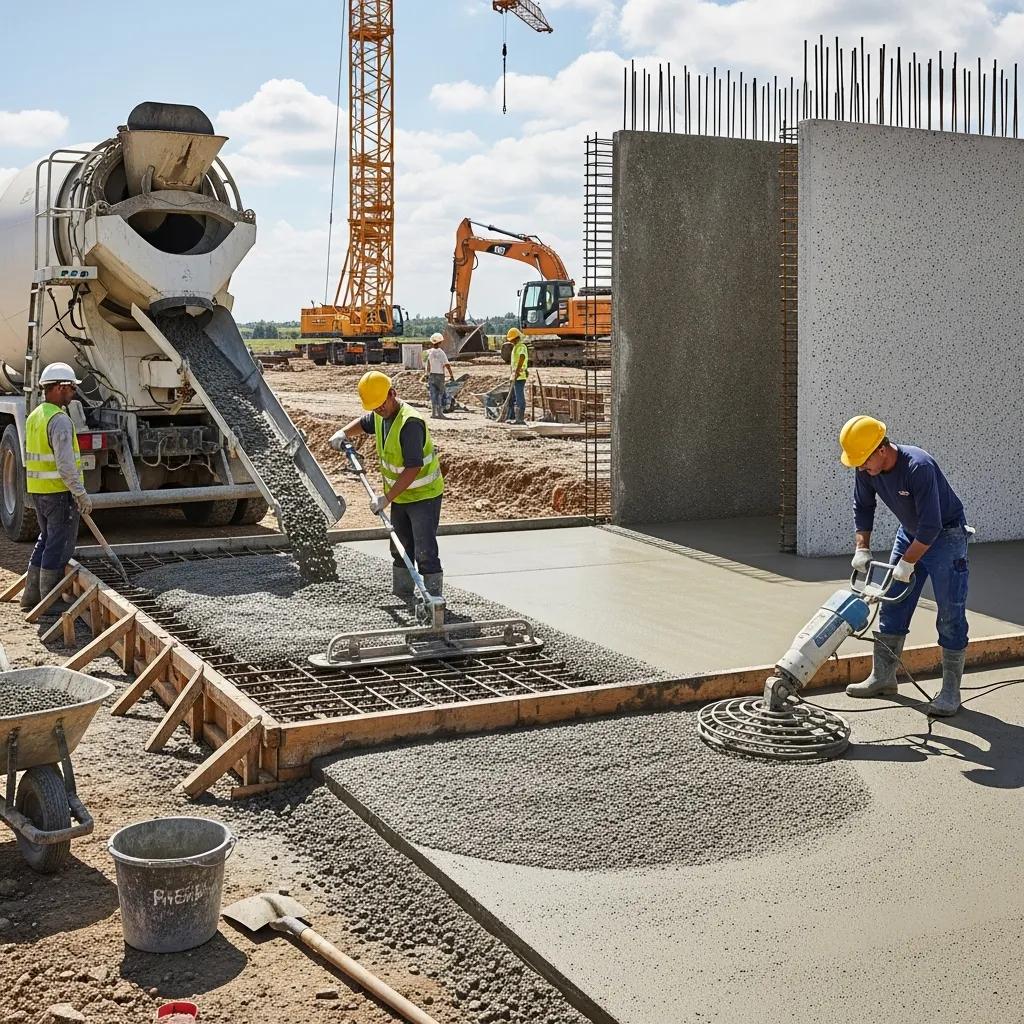
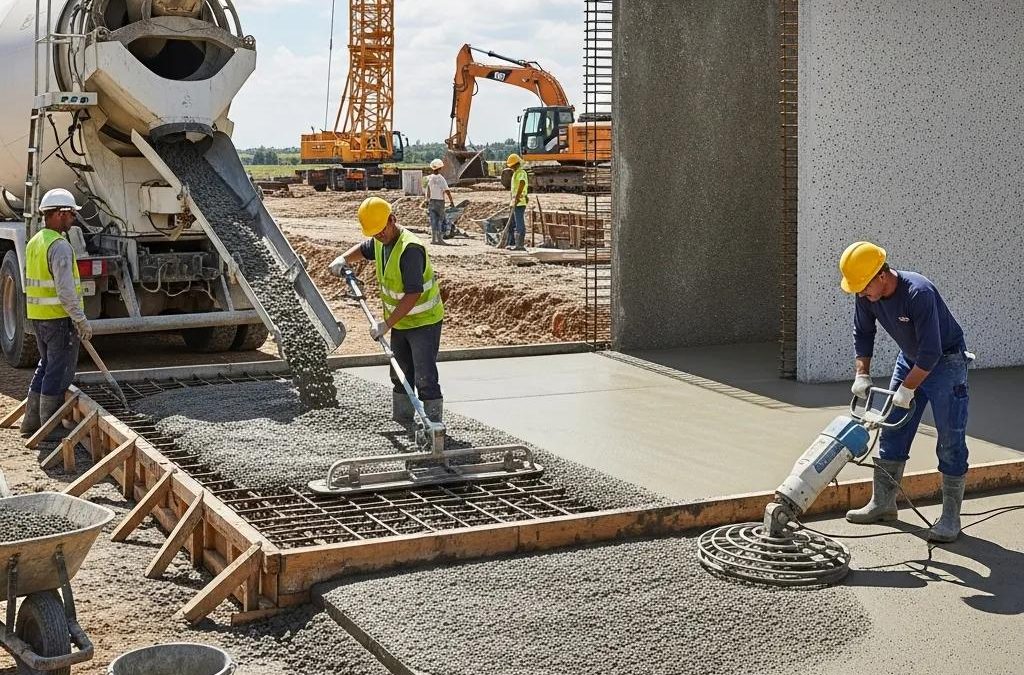
Construction site featuring workers pouring and leveling concrete, showcasing various concrete types and applications in a building project, with machinery and materials present.

Understanding Different Concrete Types: Comprehensive Guide to Mix Designs, Applications, and Strength Classes

Concrete is a fundamental material in construction, known for its versatility and strength. Understanding the various types of concrete and their specific applications is crucial for anyone involved in construction or renovation projects. This comprehensive guide will explore the different concrete types, their mix designs, and the strength classes that determine their durability and suitability for various applications. Many individuals face challenges in selecting the right concrete type for their projects, which can lead to suboptimal results. By educating readers on the characteristics and applications of different concrete types, we aim to provide clarity and guidance. This article will cover the main types of concrete mixes, how mix designs are formulated, the significance of strength classes, best practices for curing, and common questions about choosing the right concrete type.

What Are the Main Types of Concrete Mixes and Their Characteristics?

Concrete mixes can be categorized into several types, each with unique properties and applications. The primary types include ready mix concrete, high strength concrete, and fiber reinforced concrete. Understanding these types is essential for selecting the right mix for specific construction needs.

How Do Ready Mix and High Strength Concrete Differ?

Ready mix concrete is a pre-mixed concrete delivered to the construction site, ensuring consistency and quality. It is ideal for projects requiring large volumes of concrete, such as foundations and slabs. In contrast, high strength concrete is designed to withstand greater loads and is often used in high-rise buildings and structures requiring enhanced durability. The key differences lie in their composition and intended use, with ready mix focusing on convenience and high strength concrete emphasizing performance.

What Are the Benefits of Fiber Reinforced Concrete?

Fiber reinforced concrete incorporates fibers, such as steel or synthetic materials, to enhance its structural integrity. This type of concrete offers several benefits, including improved crack resistance, increased durability, and enhanced load-bearing capacity. It is commonly used in applications such as pavements, slabs, and precast products, where added strength and flexibility are essential.

Further research delves into the comprehensive development and performance of fiber-reinforced concrete, highlighting its significant impact on construction.

Fiber Reinforced Concrete: Development & Performance Review

cracks resistant concrete led to the development of fiber-reinforced concrete. This paper reviews the effects of fibers inclusion on the performance of concrete. Generally, the addition of

Fiber reinforced concrete: a review, M Anas, 2022

How Are Concrete Mix Designs Formulated for Various Applications?

Concrete mix designs are tailored to meet the specific requirements of different applications. Factors such as load-bearing capacity, environmental conditions, and desired finish play a crucial role in determining the appropriate mix.

What Are Common Concrete Mix Ratios and Their Uses?
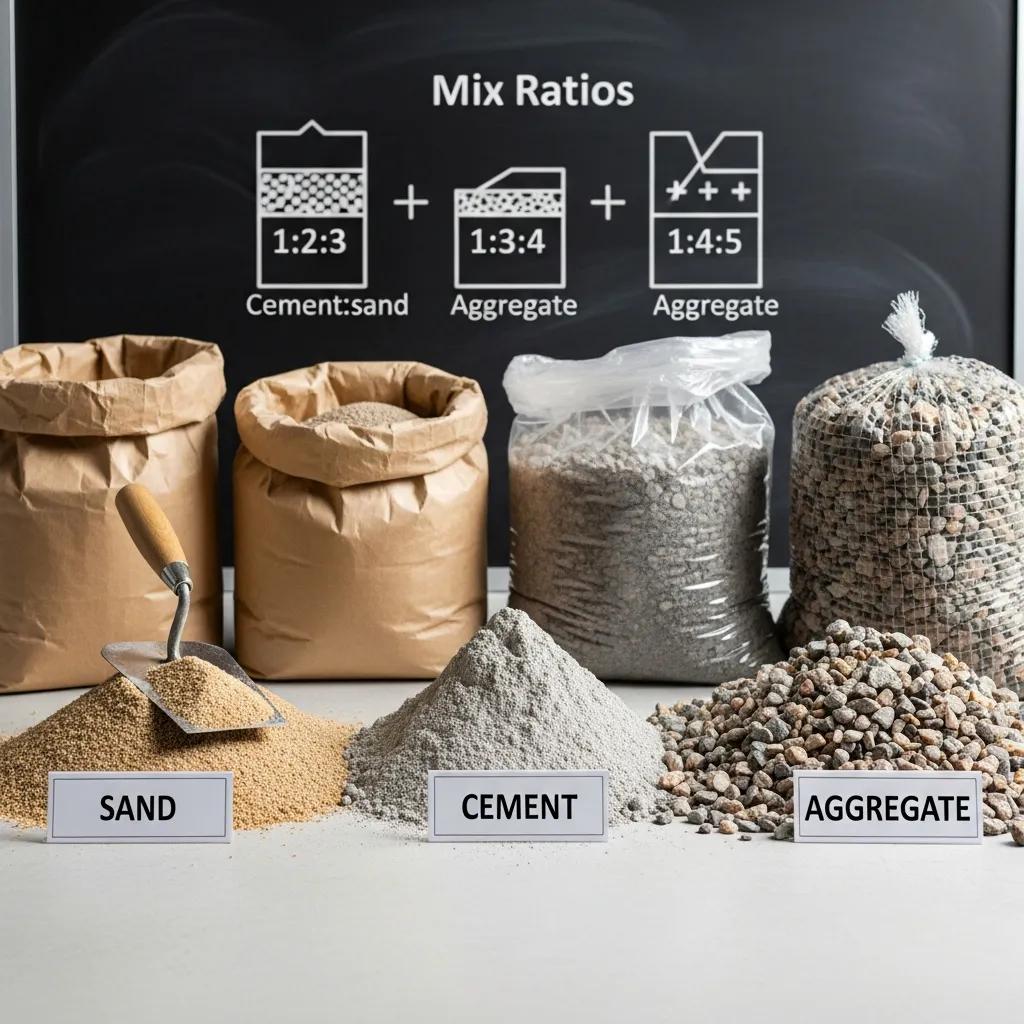
Illustration of concrete mix ratios with labeled piles of sand, cement, and aggregate materials, highlighting essential components for construction mix designs.

Common concrete mix ratios typically include a combination of cement, aggregates, and water. For instance, a standard mix ratio for general construction is 1:2:4 (cement:sand:aggregate). This ratio is suitable for most structural applications, providing a balance of strength and workability. Other ratios may be used for specialized applications, such as high-strength or lightweight concrete.

How Does Local Climate Influence Concrete Mix Selection in Syracuse?

In Syracuse, local climate conditions significantly impact concrete mix selection. Cold winters and potential freeze-thaw cycles necessitate the use of air-entrained concrete to enhance durability. Additionally, incorporating additives can improve workability and setting times in colder temperatures, ensuring optimal performance throughout the year.

The importance of air-entrained concrete in mitigating the effects of freeze-thaw cycles on durability has been a subject of extensive study.

Freeze-Thaw Durability of Air-Entrained Concrete

freeze-thaw durability of concrete made with four Indiana s “Durability” as used in this paper refers to resistance

Freeze and Thaw Durability of Air-Entrained Concrete Using Indiana Aggregates, 1949

What Are Concrete Strength Classes and How Do They Impact Durability?

Concrete strength classes are categorized based on their compressive strength, measured in megapascals (MPa). Understanding these classes is vital for ensuring the durability and longevity of concrete structures.

How Are Strength Classes Measured and Classified?

Strength classes are determined through standardized testing methods, where concrete samples are subjected to compressive loads until failure. The results are classified into different strength categories, such as C25/30 or C30/37, indicating the concrete’s characteristic cylinder and cube compressive strengths, respectively. This classification helps engineers and builders select the appropriate concrete for specific structural requirements.

Which Strength Classes Are Suitable for Residential vs. Commercial Projects?

For residential projects, strength classes such as C20/25 or C25/30 are often sufficient for foundations and slabs. In contrast, commercial projects may require higher strength classes, such as C30/37 or C40/50, to accommodate greater loads and ensure structural integrity. The choice of strength class directly impacts the durability and performance of the concrete in various applications.

Concrete Types Explained: Mix Designs, Uses & Strength Ratings

Curing is a critical process that significantly affects the performance and durability of concrete. Proper curing techniques ensure that the concrete achieves its intended strength and longevity.

How Do Different Curing Methods Affect Concrete Strength?

Different curing methods, such as water curing, membrane curing, and steam curing, influence the hydration process of concrete. Water curing, which involves keeping the surface moist, is one of the most effective methods for enhancing strength and durability. In contrast, inadequate curing can lead to surface cracking and reduced strength, highlighting the importance of proper curing practices.

What Are Innovations in Rapid Curing Technologies?

Recent advancements in curing technologies have introduced methods such as chemical curing agents and accelerated curing processes. These innovations allow for faster setting times and improved strength development, making them particularly beneficial in projects with tight timelines. Understanding these technologies can help contractors optimize their curing practices for better results.

How Can Decorative and Fiber Reinforced Concrete Enhance Project Outcomes?

Decorative concrete and fiber reinforced concrete offer unique advantages that can enhance the aesthetic and structural performance of construction projects.

What Decorative Concrete Options Are Available for Residential and Commercial Use?

Showcase of decorative concrete finishes in residential and commercial settings, featuring patio with stone seating, modern reception area with polished concrete floor, pebble pathway leading to contemporary house, and stylish retail space with clothing displays.

Decorative concrete options include stamped concrete, stained concrete, and exposed aggregate finishes. These options allow for creative design possibilities in both residential and commercial applications, providing an attractive and durable surface. By incorporating decorative elements, builders can enhance the visual appeal of their projects while maintaining the structural integrity of the concrete.

How Does Fiber Reinforcement Improve Concrete Performance?

Fiber reinforcement improves concrete performance by increasing its tensile strength and reducing the likelihood of cracking. This enhancement is particularly valuable in applications where dynamic loads or temperature fluctuations may occur. By utilizing fiber reinforced concrete, contractors can achieve longer-lasting and more resilient structures.

Further studies highlight how the strategic inclusion of various fibers, including steel and synthetic types, significantly influences the mechanical properties and overall performance of high-performance fiber-reinforced concrete.

Hybrid Fiber-Reinforced Concrete: Performance & Properties

This research investigates the effects of steel (ST) and synthetic (SYN) fibers on the workability and mechanical properties of HPFRC. It also analyzes their influence on the material’s

Advancing Hybrid Fiber-Reinforced Concrete: Performance, Crack Resistance Mechanism, and

Future Innovations, ZF Akbulut, 2025

What Are Common Questions About Choosing the Right Concrete Type?

Selecting the appropriate concrete type can be challenging, and many individuals have common questions regarding the decision-making process.

How Do I Choose the Right Concrete Mix for My Project?

Choosing the right concrete mix involves considering factors such as the project’s load requirements, environmental conditions, and desired finish. Consulting with concrete professionals can provide valuable insights and recommendations tailored to specific project needs. Additionally, understanding the characteristics of different concrete types can guide informed decisions.

How Long Does Concrete Take to Cure Properly?

Concrete typically requires a curing period of at least 28 days to achieve its full design strength. However, initial setting times can vary based on factors such as temperature and humidity. It is essential to monitor curing conditions and follow best practices to ensure optimal performance and durability of the concrete.