
How Long Does a Concrete Driveway Last?
Concrete Driveway Lifespan: Durability & Maintenance Tips
Concrete driveways are a common, long-lasting choice for homeowners. A properly mixed and installed concrete driveway typically lasts about 20 to 30 years, though installation quality, maintenance, and local climate influence that range. This guide summarizes lifespan expectations, key durability factors, and practical maintenance and repair guidance for homeowners in Milwaukee and nearby areas.
Lifespan of Concrete Driveways: A Comprehensive Guide
Most residential concrete driveways last roughly two to three decades. Well-prepared subbase, correct mix design, proper curing, and regular upkeep push a driveway toward the upper end of that range; poor preparation and neglect shorten it. In colder climates like Milwaukee, freeze-thaw cycles increase the risk of surface damage unless the mix and installation account for those stresses.
Factors Affecting Durability
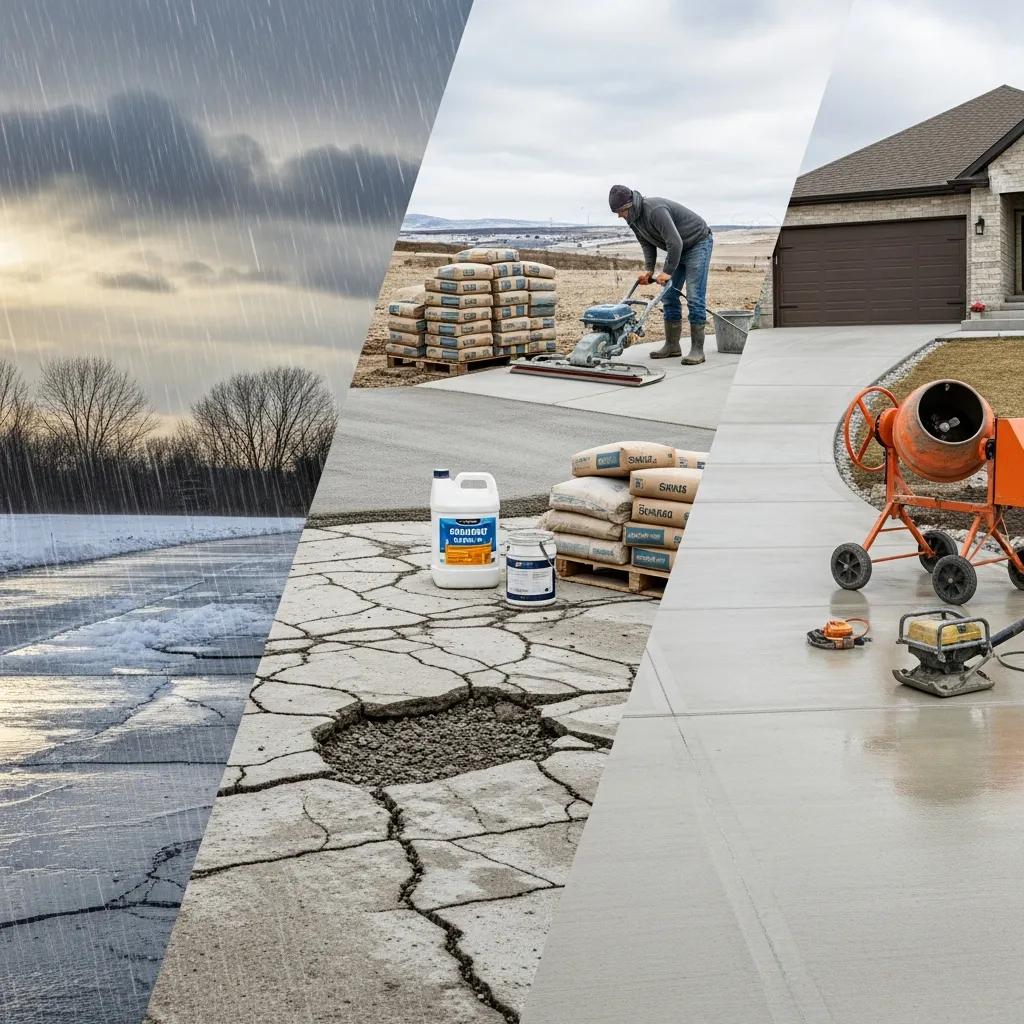
Durability depends on a few practical elements homeowners and contractors control. Addressing these helps prevent early failures.
- Weather Conditions: Freeze-thaw cycles, heavy freeze events, and prolonged moisture accelerate deterioration.
- Quality of Materials: Proper concrete mix, appropriate slump, and reinforcement improve strength.
- Installation Practices: Correct grading, compaction, joints, and curing limit cracking and settlement.
Maintenance Practices to Extend Lifespan
Timely, simple maintenance keeps a driveway performing longer without major work.
- Regular Cleaning: Remove debris, oil, and salts to reduce surface wear.
- Sealing: Reapply a breathable sealant every 3–5 years to limit moisture penetration.
- Prompt Repairs: Fill small cracks and address drainage issues before they worsen.
Morici Bros Concrete LLC provides installation, maintenance, and repair services to help homeowners maximize driveway life.
Installation Practices
How a driveway is installed strongly affects longevity. Key steps include proper site grading and compaction, using an appropriate concrete mix, placing control and expansion joints, and allowing adequate curing time. Good finishing prevents surface defects while reinforcement (rebar or mesh) and suitable thickness improve load resistance.
- Proper Site Preparation: Grade and compact the base to avoid settling.
- Curing Time: Protect and cure the slab to reach intended strength.
- Finishing Techniques: Use finishes that match intended use and local conditions.
What Is the Average Lifespan of a Concrete Driveway?
Expect about 20–30 years for a residential concrete driveway under typical conditions. Lifespan depends on initial construction quality and consistent maintenance over time.
Typical Durability Range for Residential and Light Commercial Driveways
Residential driveways usually last longer than light commercial ones because of lighter, less frequent loads. Commercial use increases stress and can shorten service life unless designed for heavier loads.
How Milwaukee’s Climate Influences Concrete Driveway Longevity
Milwaukee’s cold winters and freeze-thaw cycles make mix design, air entrainment, and proper sealing more important. Choosing materials and practices suited to local conditions reduces cracking and surface scaling.
Which Factors Affect Concrete Driveway Durability?
Material quality, slab thickness (commonly 4–6 inches for residences), reinforcement, and site-specific conditions such as soil type and drainage determine how well a driveway ages. Address these at installation and in periodic maintenance checks.
Material Quality, Thickness, and Reinforcement Impact
Use an appropriate mix, sufficient thickness, and reinforcement for expected loads. These choices reduce cracking and deformation under vehicles.
Installation Practices and Local Environmental Conditions
Tailor installation to local soils and climate: install proper joints, compact the base, and follow curing best practices to resist local stresses.
How Can Maintenance Extend the Life of Your Concrete Driveway?
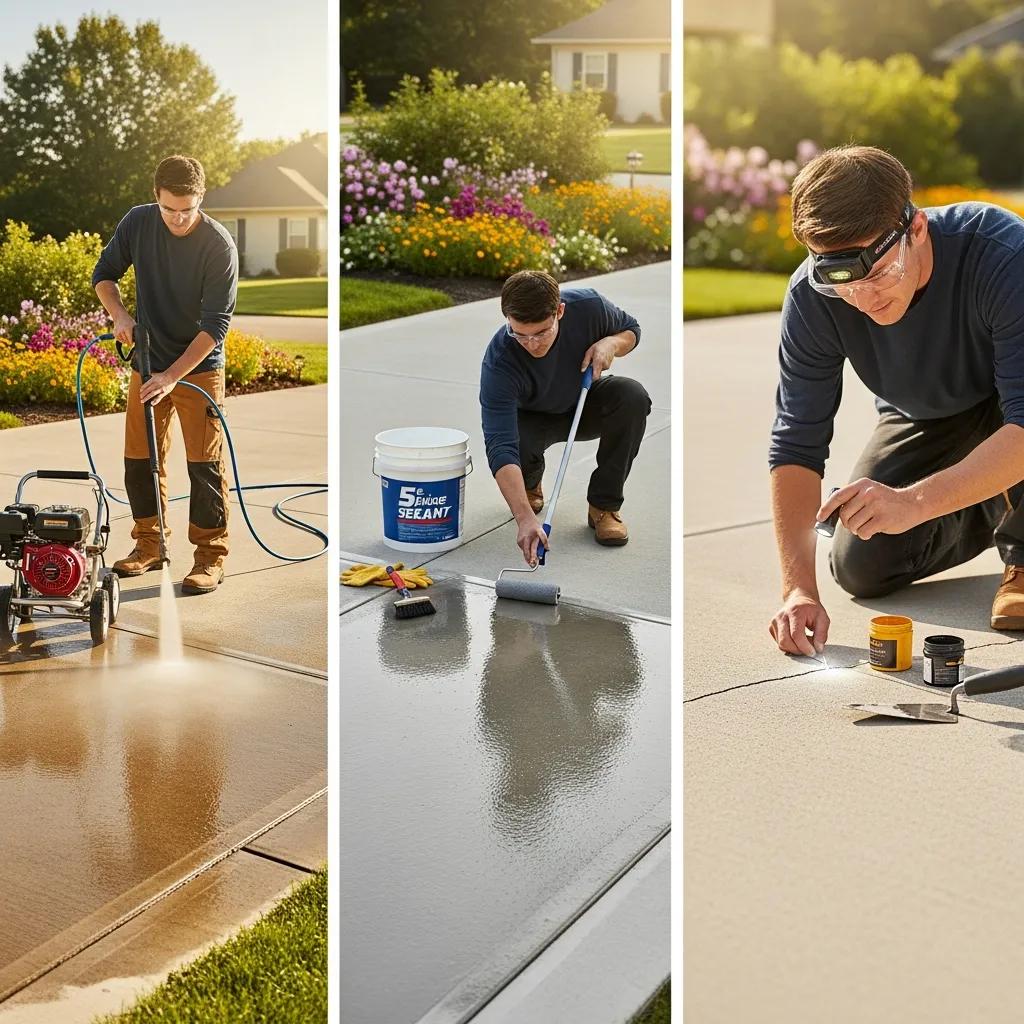
Routine care slows deterioration and preserves appearance. A few preventative steps each year prevent small problems from becoming costly repairs.
Benefits of Regular Sealing and Cleaning Practices
Sealing reduces moisture ingress and staining; cleaning removes substances that promote damage. Together they help prevent surface scaling and extend usable life.
Further research emphasizes the role of sealing agents in improving concrete durability and limiting crack development.
Sealing Agents for Concrete Durability and Crack Prevention
A comprehensive literature review and state DOTs survey were conducted to explore the application of various sealing agents in concrete durability of infrastructure systems. The main focus of the literature review was to identify: (1) current research dealing specifically with concrete sealing agents with regard to applications on bridge decks and (2) current sealing agents available in the market for use on bridge decks for sealing cracks and the entire surface.
Application of sealing agents in concrete durability of infrastructure systems, IHP Mamaghani, 2007
Recommended Maintenance Schedule for Milwaukee Homeowners
Simple recurring checks help preserve performance:
- Annual Inspections: Look for new cracks, settlement, and drainage problems.
- Cleaning: Pressure-wash or scrub once yearly to remove contaminants.
- Sealing: Reapply sealant every 3–5 years as wear indicates.
When Should You Consider Repair or Replacement?
Repair smaller issues early; consider replacement when widespread cracking, major settlement, or repeated repairs make patching impractical. Timely decisions protect property value and safety.
Common Signs Indicating Concrete Driveway Damage
Watch for these indicators:
- Cracks: Widening or structural cracks suggest deeper problems.
- Surface Damage: Flaking, spalling, or pitting reduce durability.
- Drainage Issues: Water pooling accelerates deterioration.
Repair costs vary: crack filling often ranges from $100 to $500; resurfacing typically runs about $2.00–$6.00 per square foot. Homeowners can request a free estimate from Morici Bros Concrete LLC to evaluate options.
For wider-area service information, see Morici Bros Concrete LLC.
Frequently Asked Questions
What are the signs that my concrete driveway needs repair?
Look for new or widening cracks, surface spalling, uneven settlement, or persistent water pooling. Any of these merit a professional inspection to decide on repair or replacement.
How can I prevent cracks in my concrete driveway?
Preventive steps include correct base preparation, proper joint placement, adequate thickness and reinforcement, and regular sealing every 3–5 years. Promptly fix small cracks to stop them growing.
Is it possible to resurface an old concrete driveway?
Yes. Resurfacing can restore appearance and cover minor defects, but the slab beneath must be structurally sound. A contractor can advise whether resurfacing is appropriate.
What is the best time of year to install a concrete driveway?
Spring and fall offer moderate temperatures ideal for curing. Avoid extreme heat, heavy rain, or freezing conditions during placement and early curing.
How does the thickness of concrete affect its durability?
Thicker slabs (typically 4–6 inches for residential) and proper reinforcement improve load-bearing capacity and resistance to cracking. Choose thickness based on expected vehicle loads.
Can I use salt on my concrete driveway during winter?
Use salt sparingly; it helps melt ice but can accelerate surface deterioration over time. Consider sand for traction or alternative de-icers that are gentler on concrete.
What maintenance tasks should I prioritize for my concrete driveway?
Priorities: keep the surface clean, seal every few years, inspect annually for cracks or drainage issues, and repair minor damage quickly to prevent escalation.