
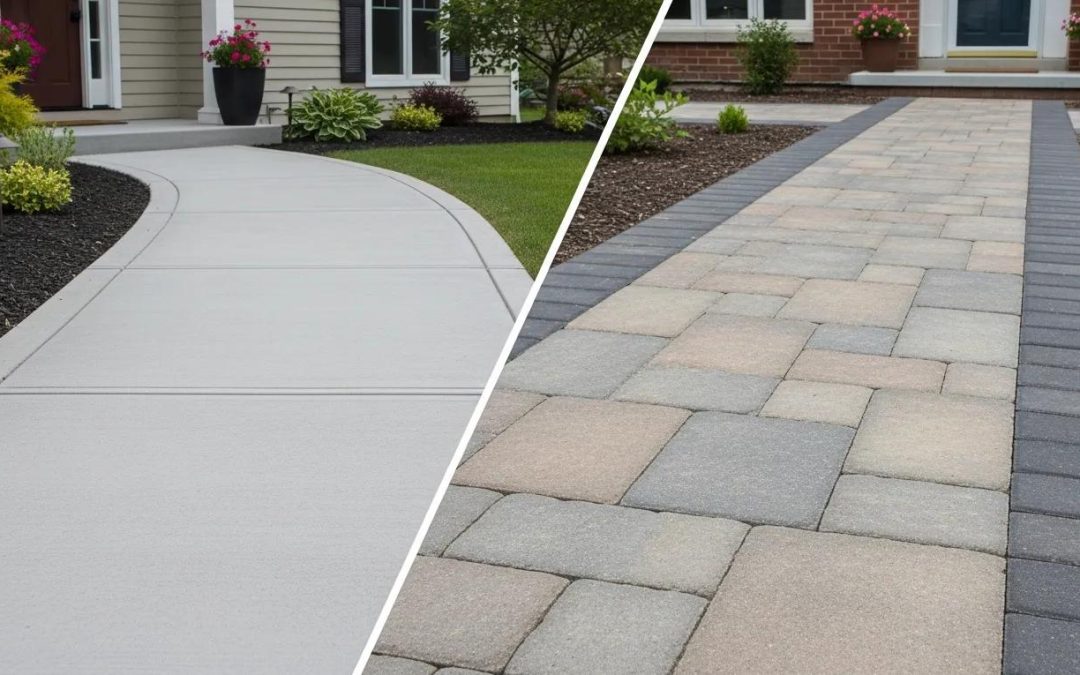
Choose the Best: Concrete Walkways vs Paver Walkways
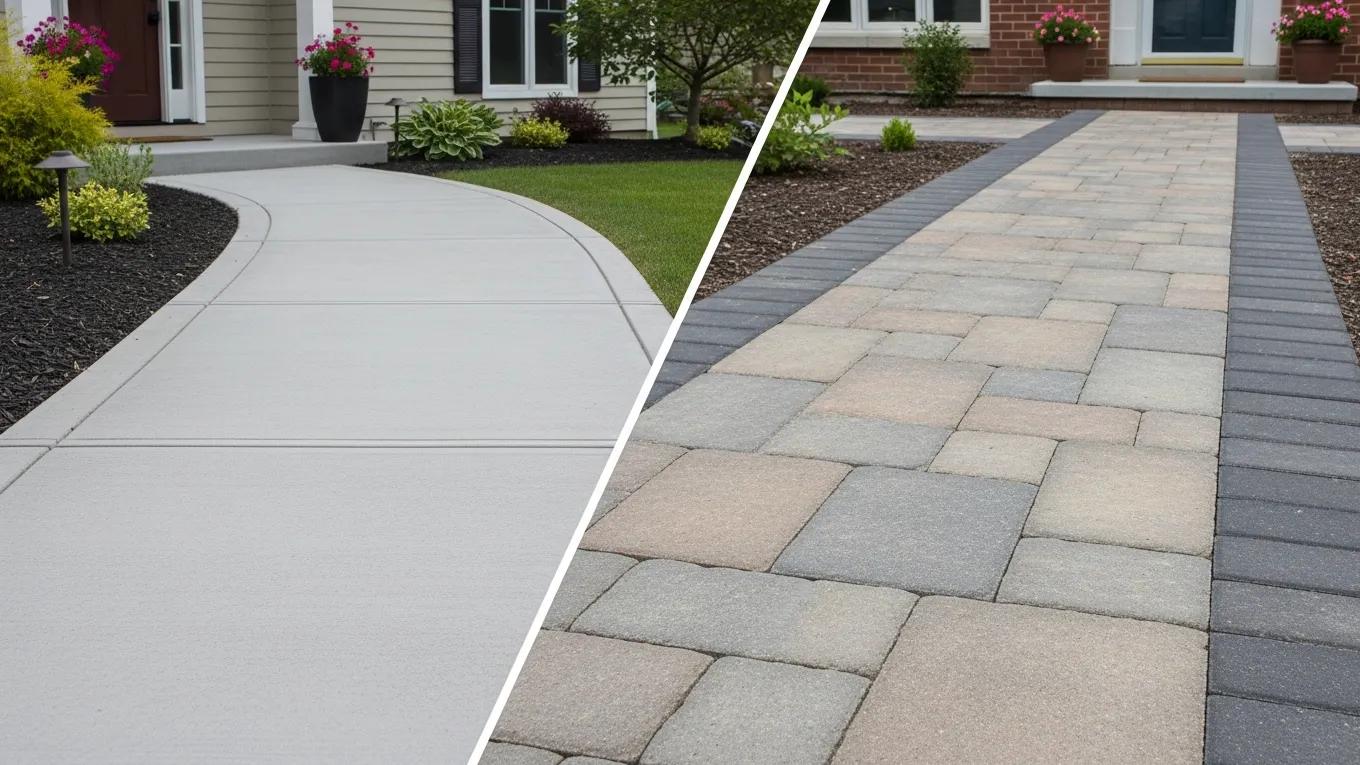
Concrete Walkways vs Paver Walkways: Which Is Better for Your Home?
By Steve Morici, Morici Bros Concrete LLC | Milwaukee’s Top
Choosing the right walkway material affects curb appeal, durability, maintenance, and cost. Concrete and paver walkways each have clear advantages: concrete offers a solid, lower-cost option with fewer visible joints, while pavers provide more design flexibility and simpler spot repairs. This article compares durability, cost, maintenance, aesthetics, and suitability to help you decide.
Further academic research underscores the complexity of selecting optimal pedestrian walkway materials, considering not only cost and durability but also architectural design and site-specific factors.
Pedestrian Walkway Costs & Materials for Residential Homes
The construction of pedestrian walkways, this cost involves materials and labor, also considering the architectural design and the construction process. This study aims to integrate a novel grey multi-criteria decision-making model for optimal pedestrian walkway site selection in urban residential communities.
Towards sustainable urban futures: Integrating a novel grey multi-criteria decision making model for optimal pedestrian walkway site selection, P Reyes-Norambuena, 2024
Comparison of Concrete Walkways and Paver Walkways
Both materials are common for residential paths but perform differently depending on budget, soil, and desired look. Below are concise comparisons of the most important factors.
Durability
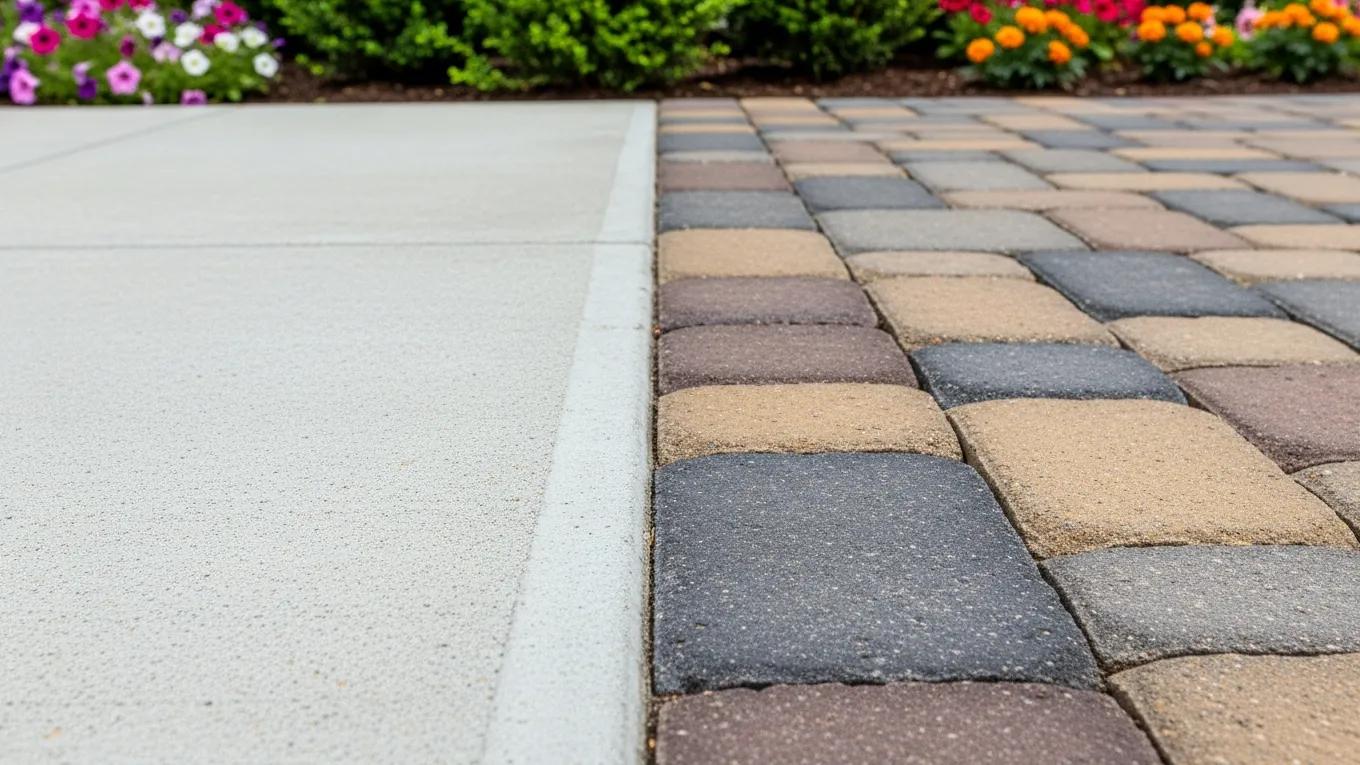
Concrete provides a continuous, load-bearing surface that can last decades with proper sealing and repairs, though it may crack under extreme freeze-thaw cycles or heavy loads. Pavers are individual units that tolerate minor ground movement and are easy to repair by replacing a few units, but they may settle or shift if not properly installed on a stable base.
Cost
Concrete typically has lower upfront costs, roughly $6–$12 per square foot, while pavers are often $10–$20 per square foot. Pavers’ higher initial cost can be offset by easier localized repairs and reduced need for full-surface restoration over time.
This table highlights typical initial and ongoing cost differences; actual prices vary by region and design complexity.
Maintenance
Concrete benefits from periodic sealing and prompt crack repair to prolong service life. Pavers require occasional re-leveling and joint-sand replenishment to prevent weeds and settling, but small repairs are usually simpler and less expensive than full concrete repairs.
A deeper dive into the life cycle of these materials reveals comprehensive insights into their environmental impact, cost, and maintenance requirements over time.
Concrete & Paver Sidewalks: LCA, Cost, Maintenance
Although a wide range of materials and constructive solutions are available for sidewalk paving, this study focuses on three very common concrete-based systems with different functionalities in terms of traffic, surface characteristics, and maintenance (i.e., interlocking blocks, continuous concrete layer, and slabs set on a 10-, 12-, and 15-cm-thick concrete base). These systems are analyzed from a life cycle perspective.
Environmental optimization of concrete sidewalks in urban areas, J Oliver-Solà, 2009
Aesthetics
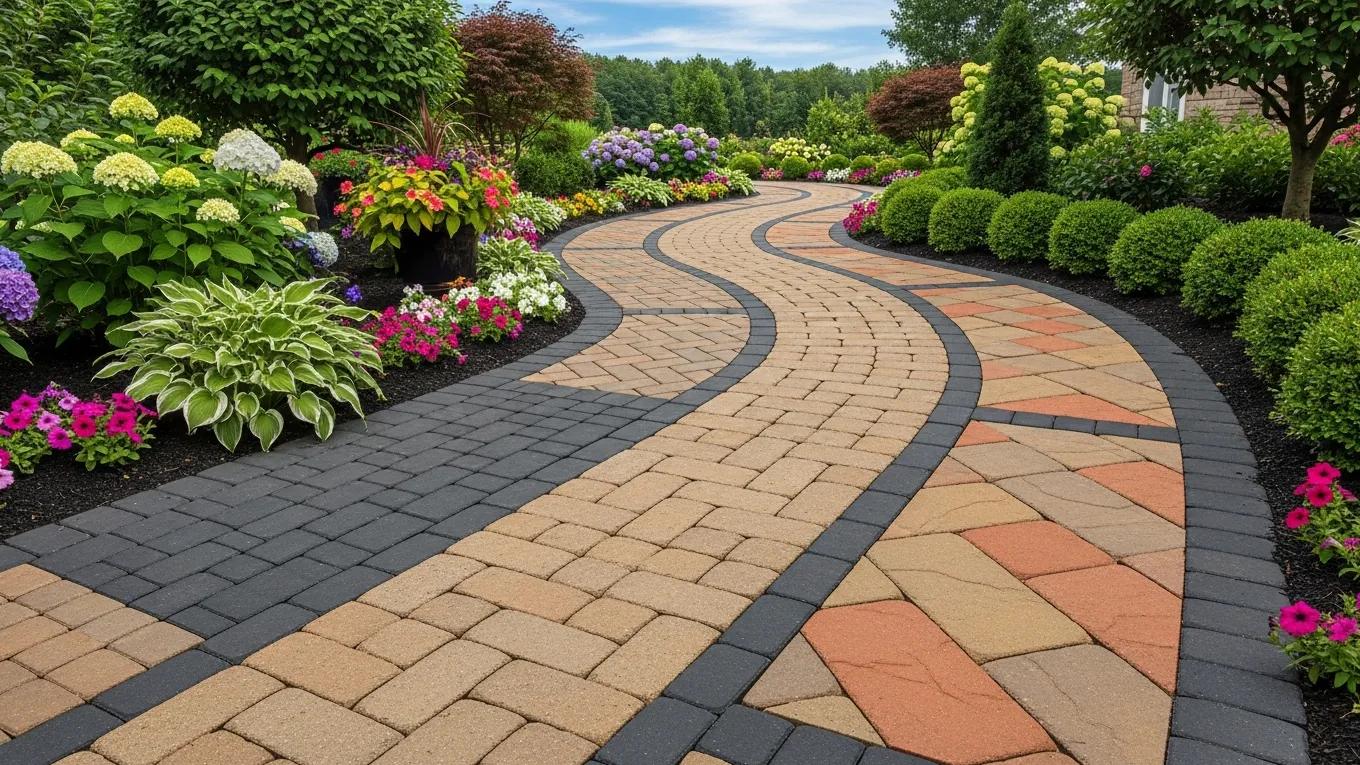
Pavers offer the widest range of colors, shapes, and patterns for custom looks. Concrete can be finished, stained, or stamped to mimic stone or add texture, but pavers generally provide more design versatility for intricate patterns and color variation.
Suitability for Various Home Environments
Concrete’s clean look suits modern architecture and high-traffic routes. Pavers fit traditional, rustic, or highly landscaped sites and can perform better where drainage or minor ground movement is a concern. Soil type, slope, and drainage are key site factors when choosing either material.
Beyond immediate aesthetic and functional considerations, the long-term environmental impact, including carbon footprint, is an increasingly important factor in material selection for urban environments.
Pavement Walkway LCA & Cost Analysis
The scope of this study was to compare carbon footprint for surfacing materials and pavement structures to mitigate impacts of climate change in urban environments. The new materials and pavement structures are developed to mitigate impacts of climate change in urban environments.
Life Cycle assessment (LCA) and costing analysis (LCCA) for conventional and permeable pavement walkways, S Vares, 2015
What Are the Key Differences Between Concrete and Paver Walkways?
- Durability: Concrete is continuous and load-bearing; pavers tolerate movement and are easier to repair.
- Cost: Concrete is generally cheaper upfront; pavers cost more initially but simplify spot repair.
- Maintenance: Concrete needs sealing and crack repair; pavers need joint maintenance and occasional re-leveling.
- Aesthetics: Pavers offer more patterns and color options; concrete provides uniform finishes and stamped effects.
How Do Material Types Affect Walkway Performance?
Material determines load capacity, flexibility, and repair approach. Choose concrete for continuous heavy-use paths; choose pavers where flexibility, drainage, or decorative patterns matter.
What Design and Aesthetic Options Are Available for Each?
Concrete allows poured shapes, stains, and stamps. Pavers allow modular patterns, mixes of colors, and accent borders for more intricate designs.
How Do Concrete and Paver Walkways Compare in Cost and Installation?
Concrete installation is generally quicker but requires proper forming and curing. Pavers are more labor-intensive to lay but permit immediate use and simple localized repairs.
What Is the Typical Cost Range for Concrete vs Paver Walkways?
Typical ranges are about $6–$12/sq ft for concrete and $10–$20/sq ft for pavers; costs vary by material, pattern, and labor in your area.
What Should Homeowners Expect During Installation?
Expect site preparation, base installation, and finishing. Concrete needs curing time; pavers require accurate base and joint compaction but can be used sooner after installation.
Which Walkway Material Offers Better Durability and Maintenance?
How Durable Are Concrete Walkways Compared to Pavers?
Concrete has strong load-bearing durability; pavers are resilient to settling and easier to repair in sections.
What Maintenance Is Required for Each Walkway Type?
Concrete: periodic sealing and spot repairs. Pavers: joint sand upkeep, occasional re-leveling, and straightforward replacement of individual units.
How Does Local Expertise Influence Walkway Installation in Milwaukee?
Contractors familiar with Milwaukee soil, freeze-thaw cycles, and drainage will recommend installation details that improve longevity and performance.
Why Choose Morici Bros Concrete LLC for Your Walkway Project?
Morici Bros Concrete LLC offers local experience, quality materials, and workmanship to match your design and site needs.
How Can Homeowners Request a Free Estimate for Walkway Installation?
Request a free estimate at Morici Bros Concrete LLC, call (414) 858-9100, or email info@moricibrosconcrete.com. Provide project details for a tailored quote.
For broader concrete services, see Morici Bros Concrete LLC for service areas in Milwaukee.
Frequently Asked Questions
What are the environmental impacts of concrete and paver walkways?
Concrete production has a higher carbon footprint, while pavers can be made from recycled materials and often allow better surface drainage; consider life-cycle effects when choosing materials.
How do weather conditions affect the performance of concrete and paver walkways?
Freeze-thaw cycles and poor drainage can crack concrete or shift pavers. Proper base preparation and drainage design reduce weather-related damage for both types.
Can I install concrete or paver walkways myself, or should I hire a professional?
DIY is possible for small, simple projects, but professionals ensure correct base preparation, drainage, and compliance with local codes—important for lasting results.
What are the best design practices for integrating walkways into landscaping?
Follow natural traffic flows, match materials to home architecture, use curves and widths for interest, and add lighting and planting for safety and curb appeal.
How do I choose the right color and style for my walkway?
Match colors and styles to your home’s exterior; choose pavers for pattern variety or stamped/stained concrete for a consistent, tailored finish.
What are the long-term costs associated with each type of walkway?
Factor in initial installation, periodic maintenance (sealing for concrete, joint upkeep for pavers), and the relative ease of repairs when estimating lifetime costs.
Are there any specific regulations or permits needed for walkway installation?
Local permits and regulations vary. Check with municipal building authorities or consult a contractor to ensure compliance before starting work.